How Many Caftan Changes Does A Moroccan Bride Wear?
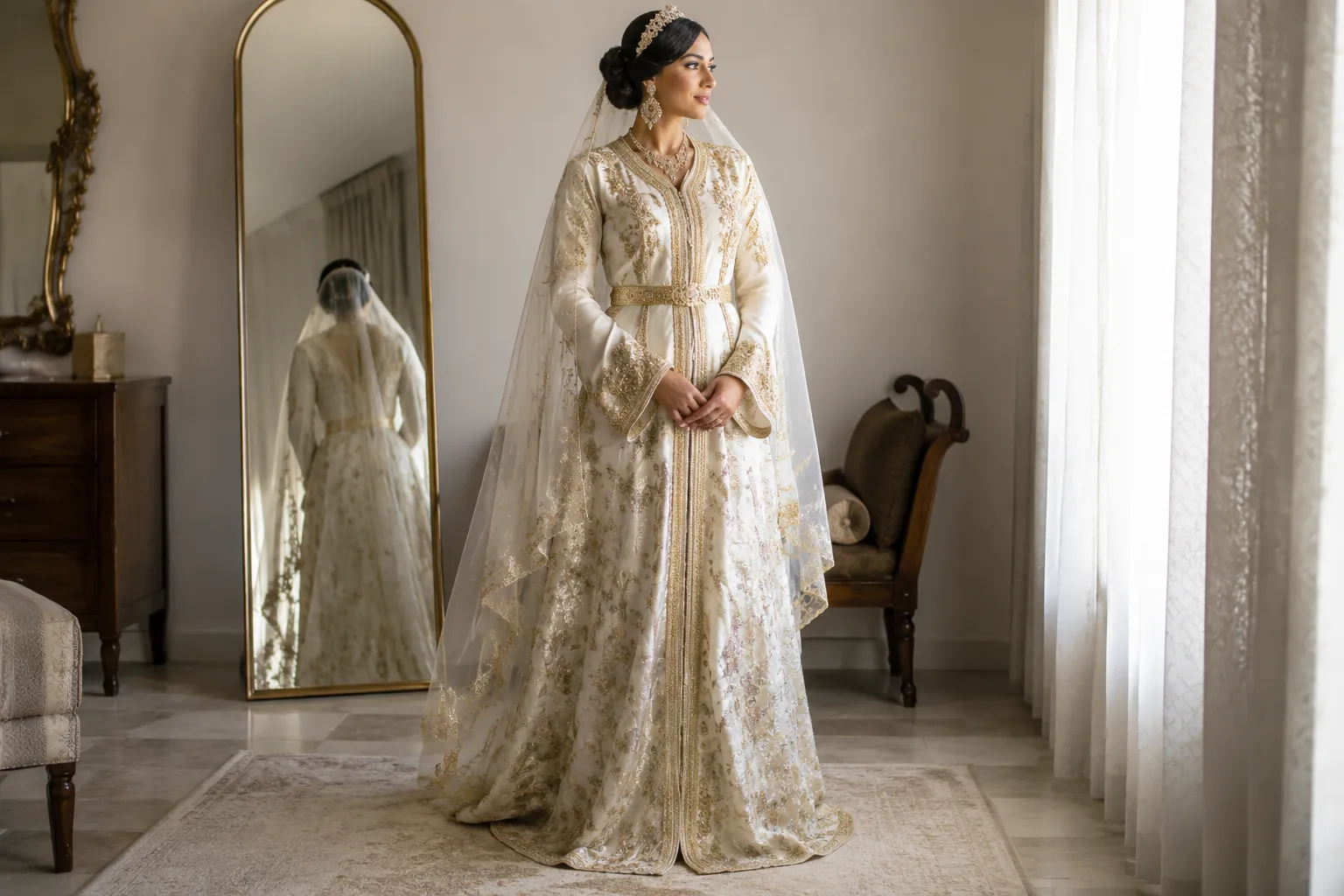
There is no reliable fixed number that applies to all Moroccan brides. Available research does not establish a national standard of three, five, seven, or any other number of changes.
A bride may wear several ceremonial looks, but the total depends on what is counted, the event schedule, family preferences, and the dressing arrangements. Start by separating complete outfits from caftans, layered takchitas, accessory changes, and restyling of the same garment.
What Counts as a Caftan Change?
People sometimes use caftan as a broad label for Moroccan bridal clothing. In practice, they may be referring to one garment, a layered formal outfit, or the bride’s complete appearance.
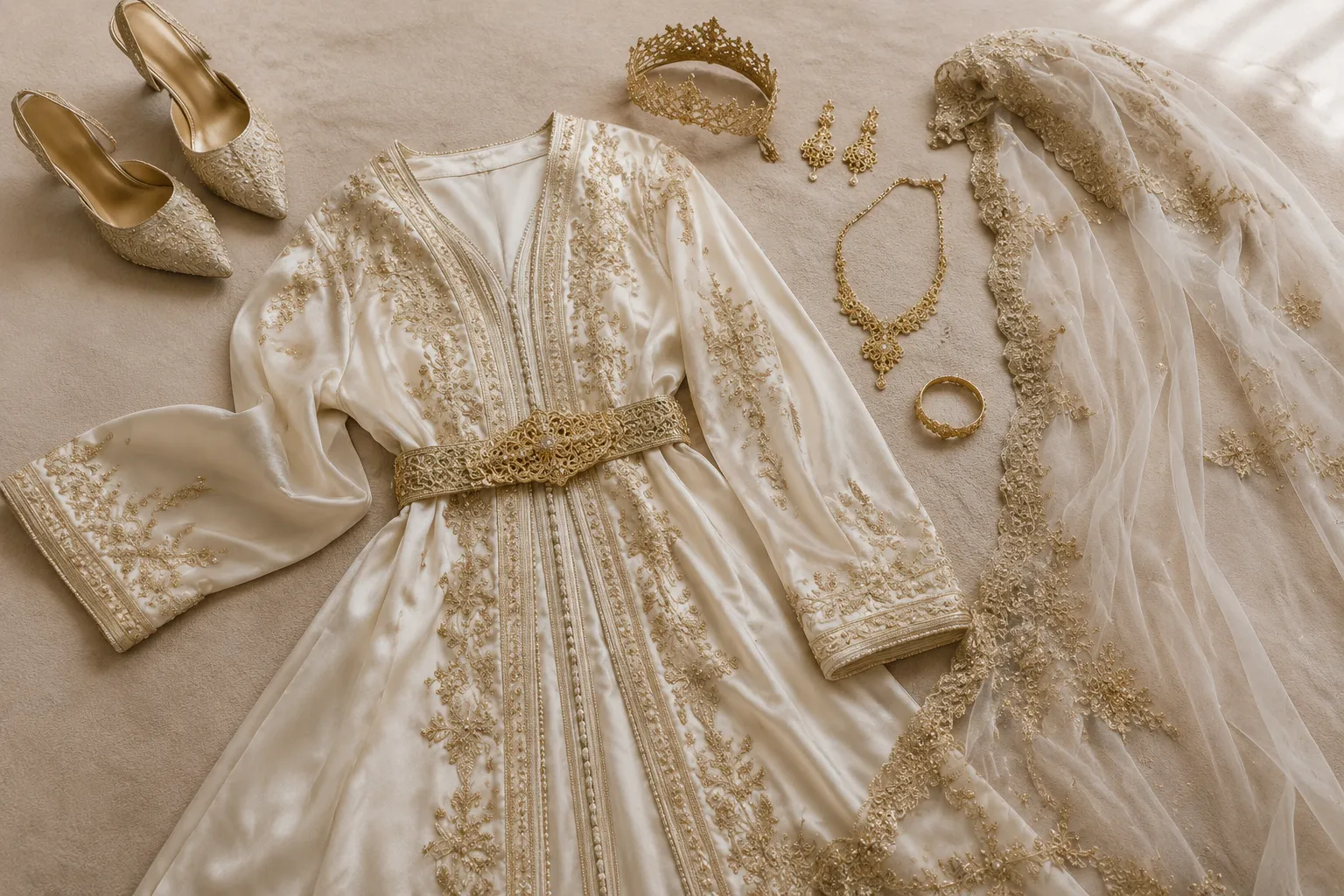
- Complete bridal look: A full change of clothing, jewelry, belt, shoes, and styling.
- Main garment: A caftan, takchita, or another garment identified by the bride and family.
- Accessory change: New jewelry, belt, headpiece, veil, or shoes without replacing the main garment.
- Restyled look: The same garment presented with different hair, accessories, or an outer layer.
- Ceremony-specific look: Clothing assigned to the henna night, an entrance, family portraits, or another event moment.
This explains why two accounts of the same wedding can give different totals. One person may count every distinct appearance, while another counts only garments specifically described as caftans.
Is There a Standard Number of Moroccan Bridal Outfits?
No dependable contemporary range is established by the available academic material. Research instead documents differences among local settings, historical periods, social circumstances, and Moroccan diaspora celebrations.
A study of one wedding setting, such as Fez or Brussels, cannot define a national outfit order. Some clothing systems may also center on particular garments, colors, family roles, or ceremonial moments rather than a repeated caftan sequence.
Treat a popular number as an example unless its source identifies:
- The location and date of the wedding.
- Whether the count covers one evening or several events.
- Which garments and accessories were included.
- Whether restyling was counted as another look.
- Who documented or reported the wardrobe.
How to Count the Bride’s Outfit Changes
1. List each planned appearance
Begin with the actual event schedule. Possible entries may include a henna-night appearance, reception entrance, family portrait session, later reception look, or closing look.
Do not label every entry a caftan until the bride, family, or dresser has named the garment.
2. Give each change a clear label
| Planning label | What it measures |
|---|---|
| Full look | Clothing, styling, jewelry, and accessories together |
| Main garment | The principal caftan, takchita, or other bridal garment |
| Styling change | Jewelry, belt, hair, veil, or another visible adjustment |
| Ceremony look | Clothing assigned to a particular event moment |
| Photo look | A change scheduled primarily for portraits |
Shared labels prevent the family, photographer, venue, and dressing team from working with different totals.
3. Put every transition on the timeline
An outfit change can affect entrances, portraits, meal service, music, and the bride’s time with guests. The schedule should record:
- The bride’s final appearance in the current look.
- Her departure from the guest area.
- Dressing and styling time.
- Any jewelry, belt, veil, or hair adjustment.
- The photographer’s preparation.
- The cue for the next entrance or portrait.
- The bride’s return to the celebration.
No standard duration for these steps is established by the cited research. Use the time estimate provided by the people handling the actual garments and event.
Who Coordinates the Changes?
The bride decides which looks matter and how much time she is comfortable spending away from guests. Family members may have preferences about garments, colors, portraits, or the order of appearances, but these should be discussed rather than assumed.
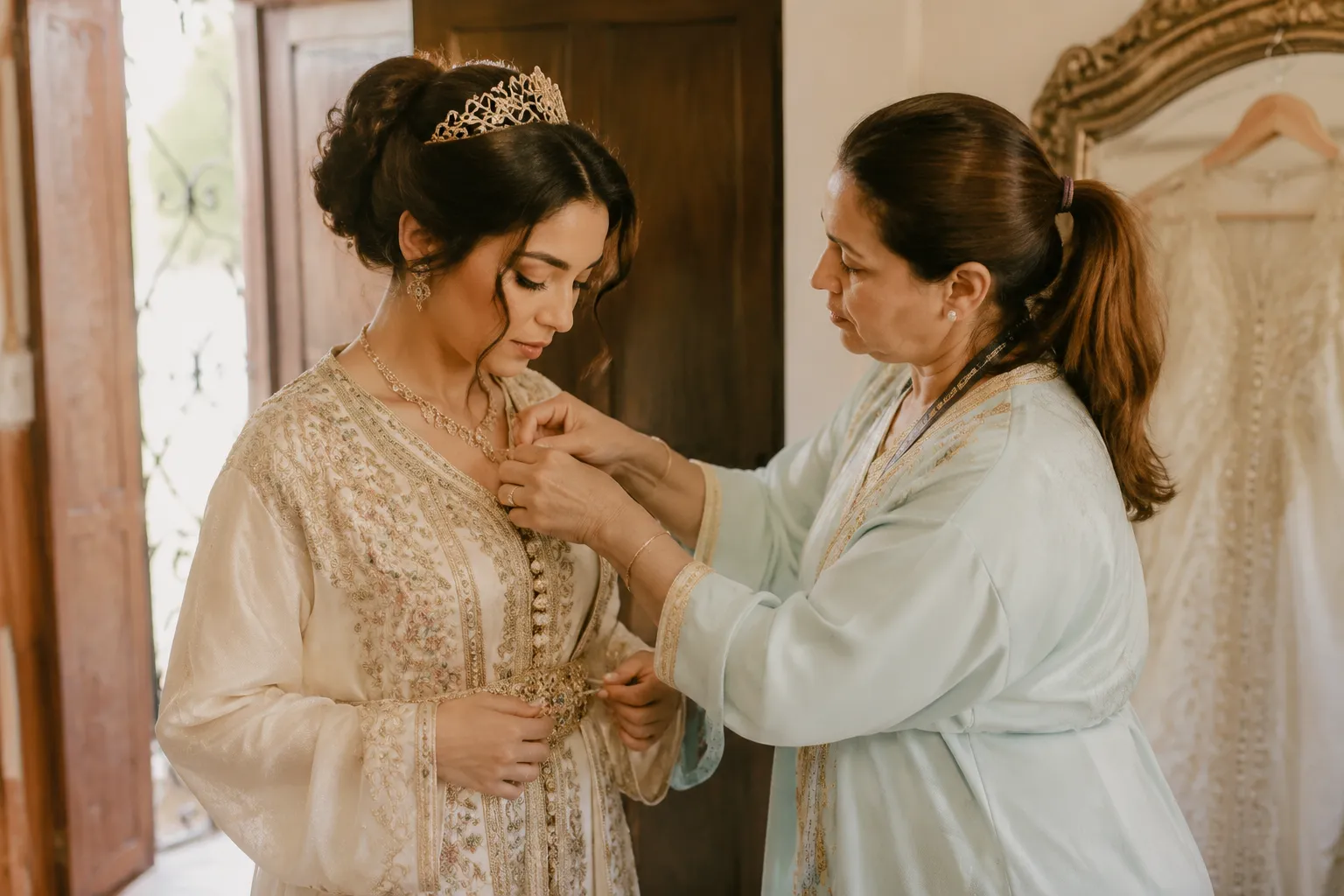
A negafa, a dresser who may assist with bridal clothing and presentation, can have different responsibilities depending on the arrangement. Establish whether that person will prepare garments, handle accessories, assist with each change, track the order, and give the ready cue.
The photographer needs to know which looks require individual portraits, couple photographs, family groups, entrance coverage, or garment details. The venue contact should know when the bride leaves and returns so that service, music, and guest movement can be adjusted.
What Affects the Number of Changes?
There is no formula for calculating the total. The practical decision depends on several event-specific questions:
- Is the wedding one event or a series of connected celebrations?
- Are the henna night and reception scheduled separately?
- Are particular looks associated with family moments or portraits?
- How much private dressing space is available?
- Who will assist with garments, jewelry, and styling?
- Can the bride move and sit comfortably in each look?
- Can the venue accommodate the proposed transitions?
- Will the photographer be present for every planned appearance?
- Are garments being borrowed, rented, altered, or moved between locations?
A longer event may make more appearances possible, but it does not make additional caftans necessary.
Caftans and Complete Bridal Looks Are Not the Same Count
A complete look may include the main garment, belt, jewelry, shoes, hair styling, makeup, and a veil or head covering. Changing only the belt and jewelry can create a different presentation without adding another caftan.
Layered clothing creates another distinction. Some families use caftan as a general conversational term, while others distinguish a caftan from a takchita or another named garment. Use the bride’s and family’s terminology, then record whether each transition involves a new garment, a new outer layer, or styling only.
Questions to Confirm Before Finalizing the Timeline
- How many complete looks does the bride want?
- Which entries are full clothing changes, and which are styling changes?
- Does the henna night have a separate wardrobe?
- Which looks are tied to entrances or family photographs?
- How much dressing time does each garment require?
- Who prepares the belts, jewelry, veils, shoes, and headpieces?
- Who tells the photographer and venue that the bride is ready?
- What changes in the schedule if dressing takes longer than expected?
The Practical Answer
So, how many caftans does a Moroccan bride wear? There is no verified number that applies across Moroccan weddings. Count the bride’s planned complete looks first, then separate new garments from accessory changes and restyling.
The bride, family, negafa or dresser, photographer, and venue should agree on the names, order, timing, entrances, and portrait needs. These attire choices belong to the celebration plan; they do not determine civil status or registration.
Sources
- A Moroccan wedding ceremony between tradition and modernity: the role of women in the preparations
- Making Money, Marking Identities: On the Economic, Social and Cultural Functions of Moroccan Weddings in Brussels
- A Common Motivation—a Specific Style for Each Culture: Towards a Comparison of Wedding Rituals in Morocco
- Defining Moroccanness: the aesthetics and politics of contemporary Moroccan fashion design