Traditional Moroccan Bridal Caftan Sequence
Plan the bride’s looks around the evening’s handoffs rather than a fixed national order. A Moroccan bridal caftan sequence may include one or several caftan or takchita changes, with accessories, entrances, family greetings, portraits, and reception timing arranged according to the family, region, venue, and event format.
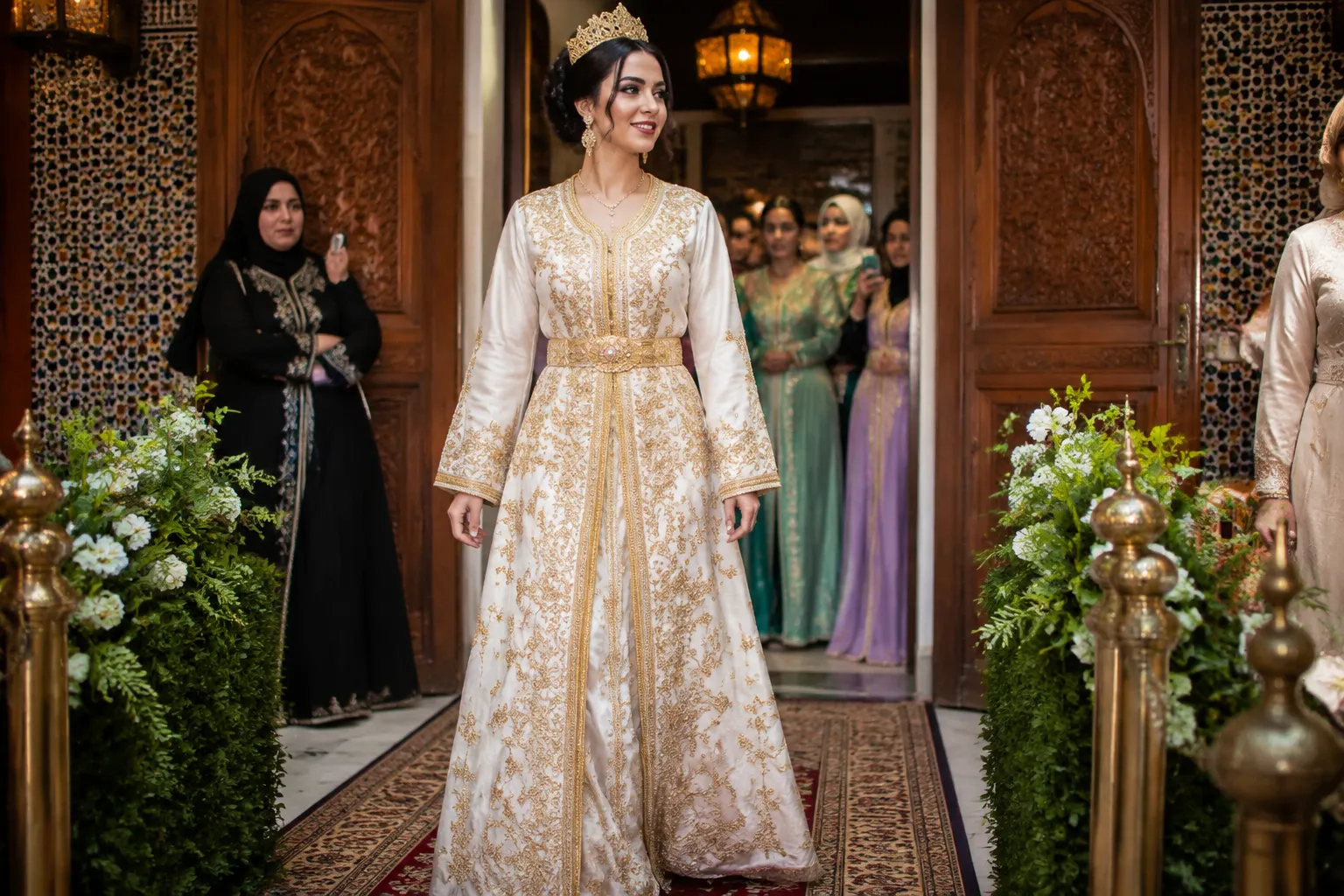
Start with the bride’s preferred looks, then assign responsibility for dressing, jewelry, cues, photography, storage, and timing. Review the written order with the bride, a family representative, the negafa or bridal dresser, venue contact, photographer, and event coordinator.
What the Sequence May Include
A caftan sequence describes the movement from one bridal look to another during the celebration. Each transition may involve more than changing the main garment: belts, jewelry, shoes, hair, makeup, headpieces, entrances, and portraits can all affect the schedule.
- An arrival or opening look
- One or more caftan or takchita changes
- Different belts, jewelry, shoes, or headpieces
- A family entrance, greeting, or seated presentation
- Portraits with immediate family
- A later reception look or final look
These are planning categories, not universal ceremonial stages. A henna-night outfit may follow a separate plan from the main wedding celebration. Some families keep one principal look throughout the reception, while others schedule several changes.
How Many Caftans Are Usually Planned?
There is no reliable fixed number for all Moroccan weddings. The wardrobe may contain one complete look, several changes, or a smaller group adapted to the venue, event length, family preference, budget, and photography schedule.
Each additional change needs preparation time, storage space, accessory organization, and a clear backstage handoff. It can also reduce time for greetings, dinner, dancing, or family portraits.
Before confirming the wardrobe, ask:
- How many complete looks are planned?
- Which transitions require a full garment change?
- Which changes involve only a belt or accessories?
- Which looks are intended for an entrance or formal portraits?
- How much time can the venue realistically allow?
- Which look remains available if a change takes longer than expected?
An Example Change Sequence
The following arrangement is a coordination example, not a required Moroccan bridal caftan order. Adapt it to the family’s practice and the actual reception schedule.
Opening Look
Prepare the first garment, belt, jewelry, shoes, hair arrangement, and headpiece together before the bride enters the reception area. Confirm where she will wait, who gives the cue, which relatives accompany her, where the photographer stands, and where she sits afterward.
If an amariya entrance is planned, confirm the route, music cue, participants, venue clearance, and photography position separately. Its presence and format are event choices, not automatic features of every wedding.
Family Presentation or Portrait Look
After the opening moment, the bride may change for a seated presentation, family greetings, or formal portraits. The transition might involve the complete outfit or selected accessories.
Choose the portrait groups before the change. Otherwise, the bride may be ready before key relatives arrive, or the photographer may miss the intended group. Confirm the jewelry set, whether the groom changes at the same time, and whether tea service or another reception moment comes before or after the portraits.
Later Reception Look
A later look may follow dinner, family photographs, or another central reception moment. Use a clear trigger, such as the completion of a portrait list or the end of dinner service, rather than relying only on an approximate clock time.
Tell the photographer whether this look is intended for an entrance, table visits, dancing, or close family portraits. The purpose affects lighting, room layout, and guest positioning.
Optional Final Look
Some families plan a final change; others end the evening in the last principal outfit. If a final look is included, confirm the bride’s departure time, final portraits, and arrangements for returning or securing garments and jewelry.
Who Coordinates the Changes?
Responsibility should be explicit. A negafa or bridal dresser may manage parts of the dressing process, but one person should hold the current written schedule and communicate any change to the rest of the team.
| Task | Person to Confirm |
|---|---|
| Approves the final order | Bride and designated family representative |
| Prepares garments and accessories | Bridal dresser, stylist, or wardrobe helper |
| Gives the change cue | Negafa, dresser, or event coordinator |
| Protects the reception schedule | Event coordinator or venue contact |
| Adjusts photography coverage | Photographer |
| Manages family arrivals for portraits | Family representative |
| Tracks returned garments and jewelry | Assigned wardrobe or family helper |
How to Prepare Each Handoff
Treat each change as a short production handoff. Prepare the next look before the bride leaves the reception area, and keep each accessory set together.
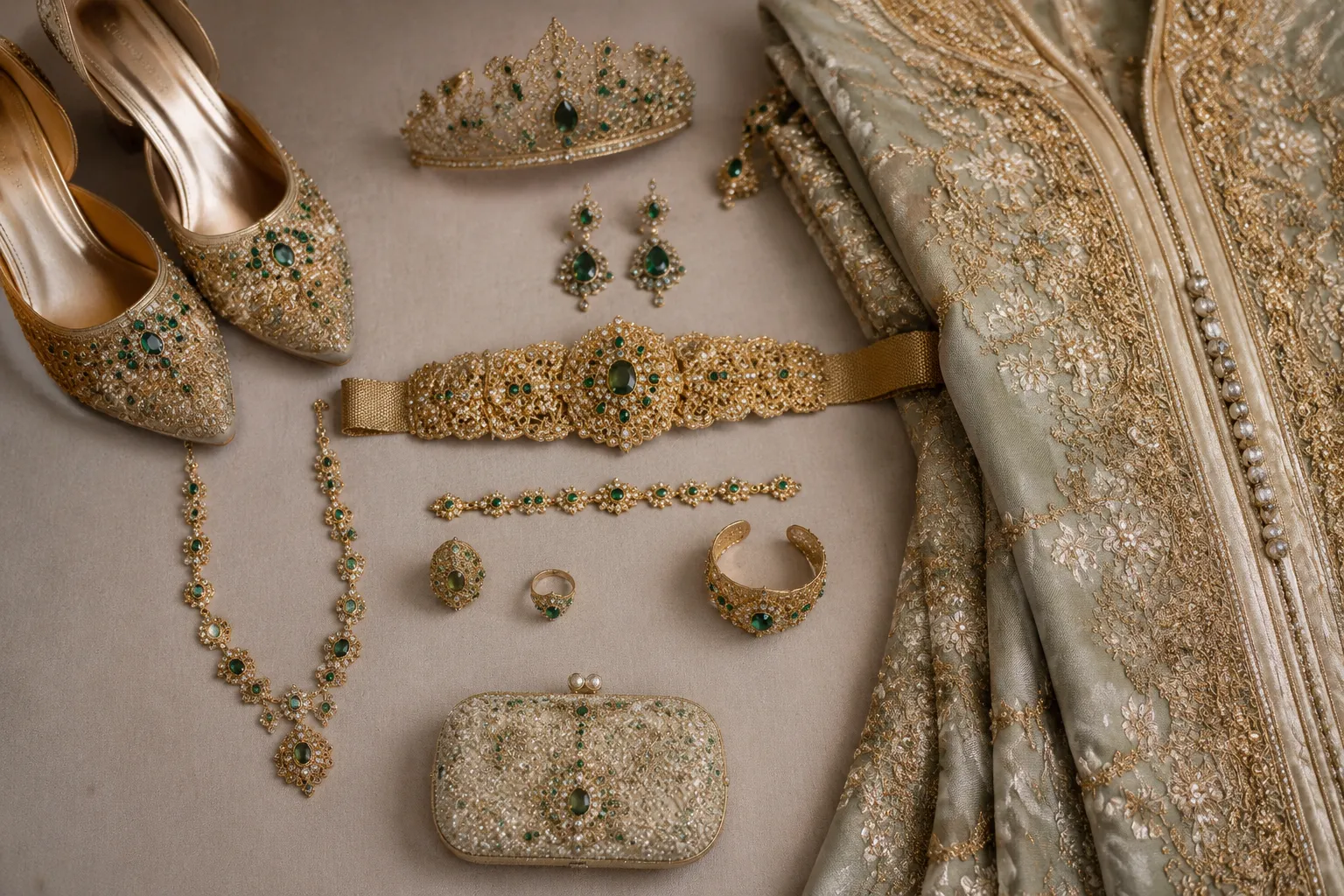
- Garment name used by the family or dresser
- Belt, jewelry, shoes, and headpiece
- Hair or makeup adjustment
- Dressing location and storage location
- Person responsible for the garment and jewelry
- Entrance or photography cue
- Expected preparation time
- Person who can approve a substitution
A missing belt, misplaced jewelry set, crowded dressing room, or distant venue corridor can delay the entire evening. The bride should know who can approve a comfortable substitute if an item becomes unavailable or unsuitable.
Timing the Sequence
There is no standard duration that applies to every caftan change. Estimate timing from the dressing team, outfit complexity, venue layout, styling needs, number of participants, and photography plan.
- The bride leaves the reception area.
- The next outfit and accessories are checked.
- The bride changes and receives any styling adjustment.
- The coordinator confirms that the reception is ready.
- The photographer moves into position.
- The bride returns for the planned entrance, greeting, or portrait.
- The previous outfit and accessories are secured.
Add a buffer after each change. Link the next transition to a practical cue, such as a completed portrait list, the end of dinner service, or a message from the coordinator. Send the photographer the order before the event so arrival images, family portraits, entrances, and reception coverage remain distinct.
Why Bridal Caftan Sequences Vary
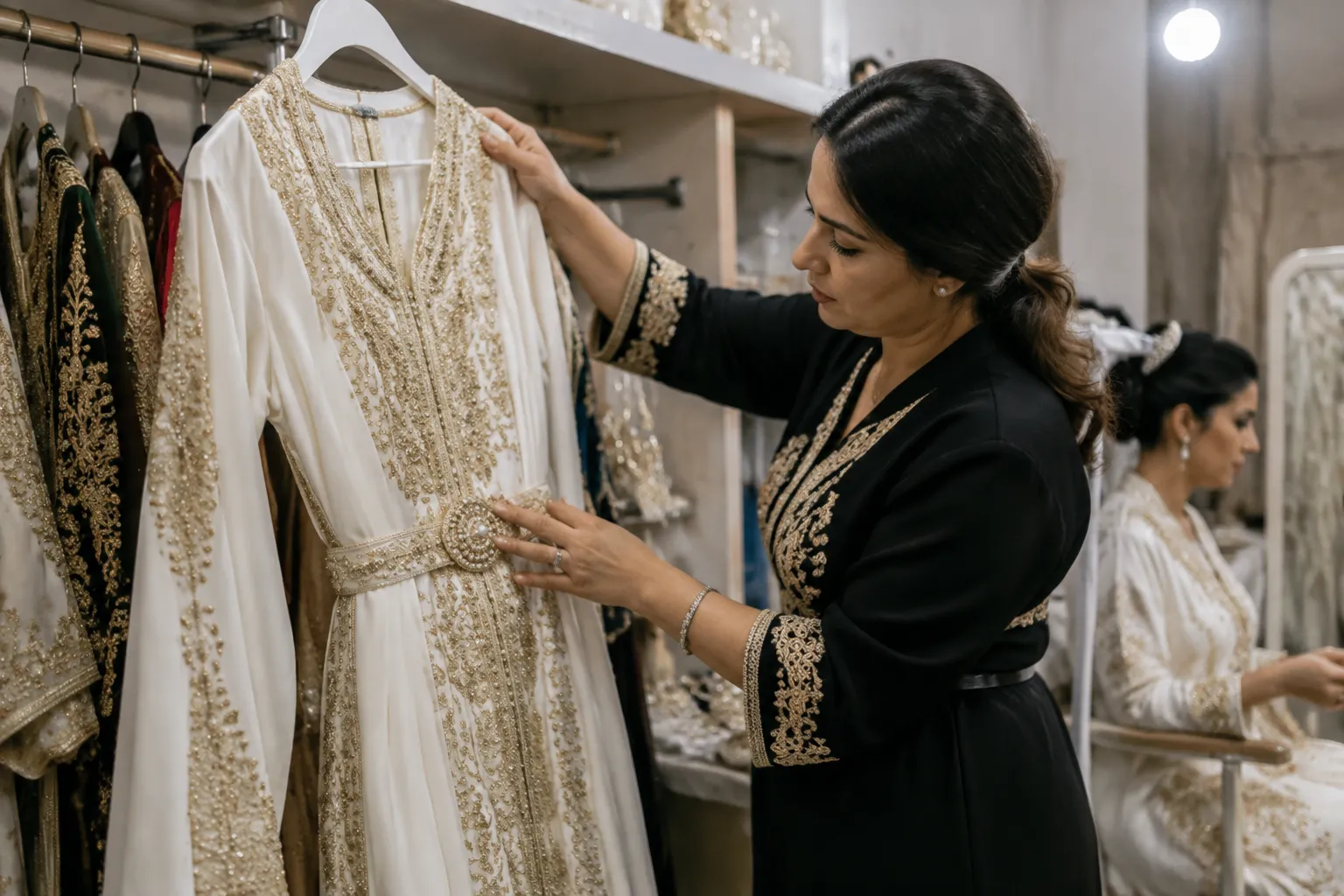
Studies of Moroccan wedding ceremonies describe differences among locations, communities, historical periods, and preparation practices. They do not establish one current outfit list, change count, entrance pairing, or order for all families.
- City, region, or community background
- Family practice and inherited terminology
- Moroccan-diaspora setting
- Size and format of the celebration
- Whether henna and the main wedding are separate events
- Venue access and dressing-room location
- Family portrait and entertainment schedules
- Contemporary styling choices
A garment name may also belong to a particular community or ceremonial setting. For example, a northern Moroccan Sephardi ensemble should not automatically be presented as the standard bridal outfit for Moroccan weddings generally. Garment terminology and ceremony order are related, but they are not interchangeable.
Caftan Sequence Confirmation Checklist
- List every look in order and mark full changes separately from accessory changes.
- Match each look with its belt, jewelry, shoes, headpiece, and styling needs.
- Confirm fittings, alterations, storage, and the person carrying each garment.
- Name the decision-maker, change-cue holder, dresser, venue contact, and family representative.
- Confirm the dressing area, route, room access, and secure storage for jewelry and previous looks.
- Link each change to a cue, portrait requirement, and practical buffer.
- Decide which moments can be shortened if the reception runs late.
- Ask which looks carry family significance and which are event-planning choices.
- Confirm whether the henna-night outfit is separate and whether a particular entrance or presentation is expected.
- Record the family’s preferred terminology on the shared schedule.
Questions for the Negafa or Bridal Dresser
- Which transitions are complete outfit changes?
- Which accessories can change without replacing the garment?
- How many helpers does each look require?
- Where will every outfit wait before use?
- Who carries the jewelry and belts?
- Which change needs the most preparation?
- What happens if the reception runs late?
- Which entrance or portrait follows each look?
- Does the proposed order reflect the family’s requested practice?
Ask for the sequence in writing. A shared version keeps cultural preference, wardrobe logistics, and reception timing visible as separate decisions.
Common Misunderstandings
“Traditional” Means One Fixed National Order
A traditional sequence may refer to a family practice, regional custom, or contemporary celebration that incorporates older clothing choices. It does not identify one order shared by all Moroccan weddings.
More Changes Make the Sequence More Traditional
The number of outfits does not establish cultural meaning by itself. A shorter sequence may suit the family, venue, and available time more effectively.
Every Change Is a Ceremonial Stage
Some changes are planned mainly for photographs, comfort, styling, or a new part of the reception. Label the purpose of each look instead of assigning every outfit the same role.
A Named Outfit Applies to All Moroccan Brides
Names and ensembles can belong to particular communities or settings. Confirm the term with the bride’s family and dresser before placing it in a general schedule.
Confirmation Wording
“We have listed the bride’s planned looks in this order: [list each look]. Which parts reflect our family or community practice, and which parts are event-planning choices? Who will coordinate each change, which relatives should be present, and what should happen if the schedule runs late?”
Ask the dresser or negafa to confirm the dressing order, accessory set, storage location, expected handoff, and readiness cue for each look. Then align that version with the venue and photographer before guests arrive.
Sources
- A Moroccan wedding ceremony between tradition and modernity: the role of women in the preparations
- A Common Motivation—a Specific Style for Each Culture: Towards a Comparison of Wedding Rituals in Morocco
- Marriage ceremonies in Morocco
- Rituel et Oralité chez les Ait Soukhmanes. Le cérémonial du mariage : une pratique en mutation
- The Sephardi Berberisca Dress, Tradition and Symbology
- The Moroccan caftan is an inspiration for contemporary Iraqi women's clothing
- Chants de mariage du Souss - Archive ouverte HAL