Moroccan Bridal Crown And Headpiece Options
A Moroccan bridal crown works best when it is chosen for a specific outfit, celebration moment, hairstyle, and family preference. It is not a required piece for every Moroccan bride, and available sources do not establish one standard crown shape or wearing order across Moroccan weddings.
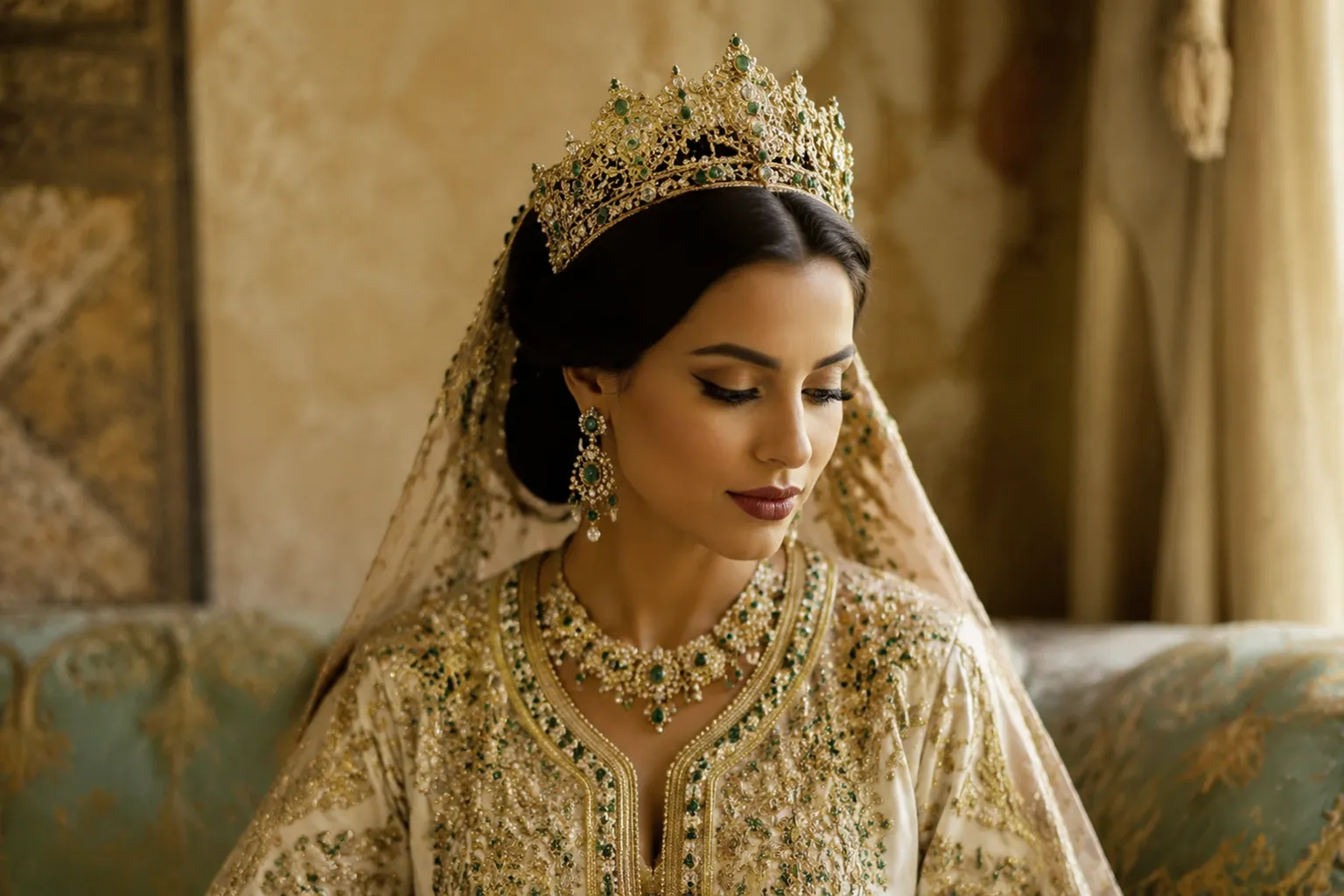
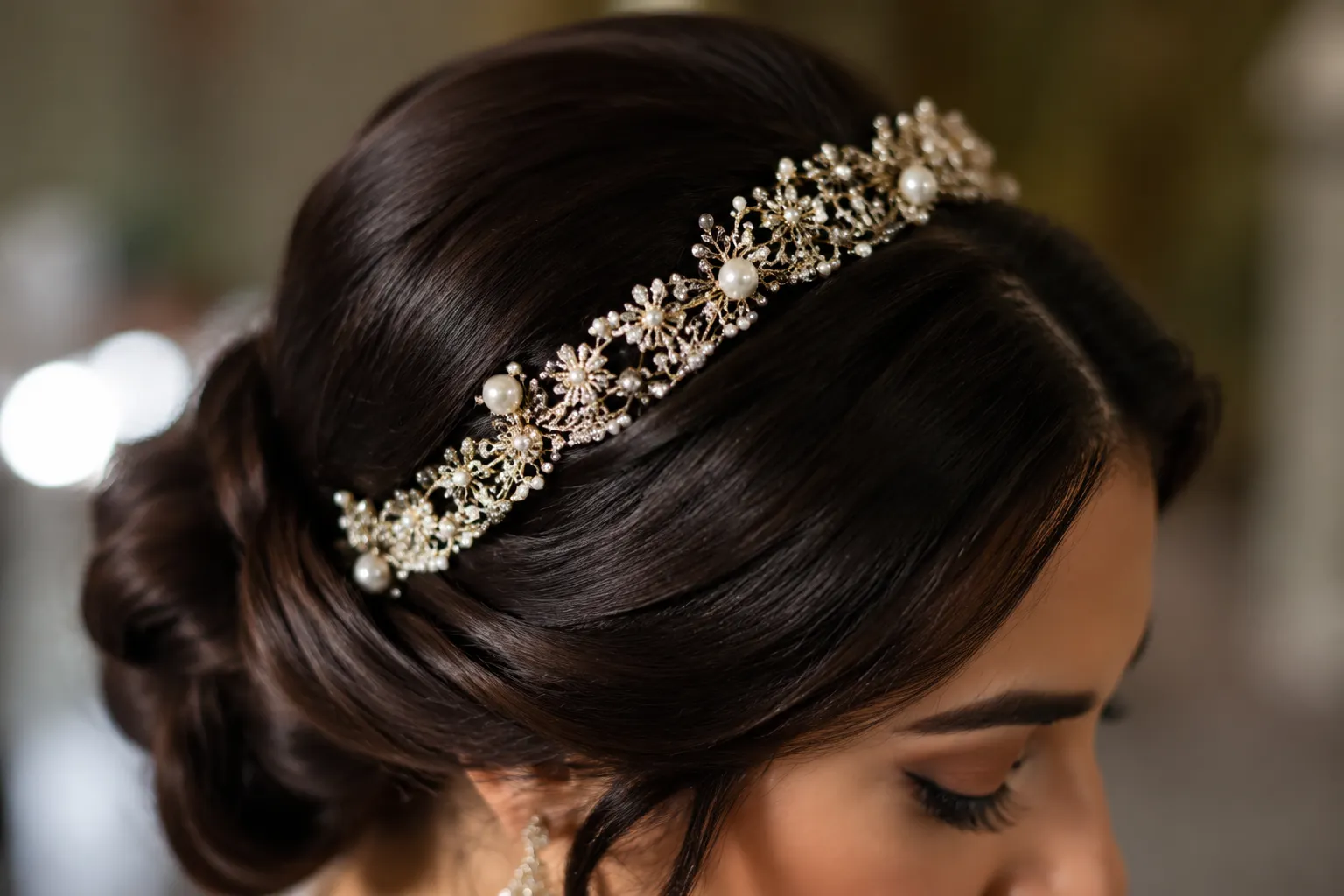
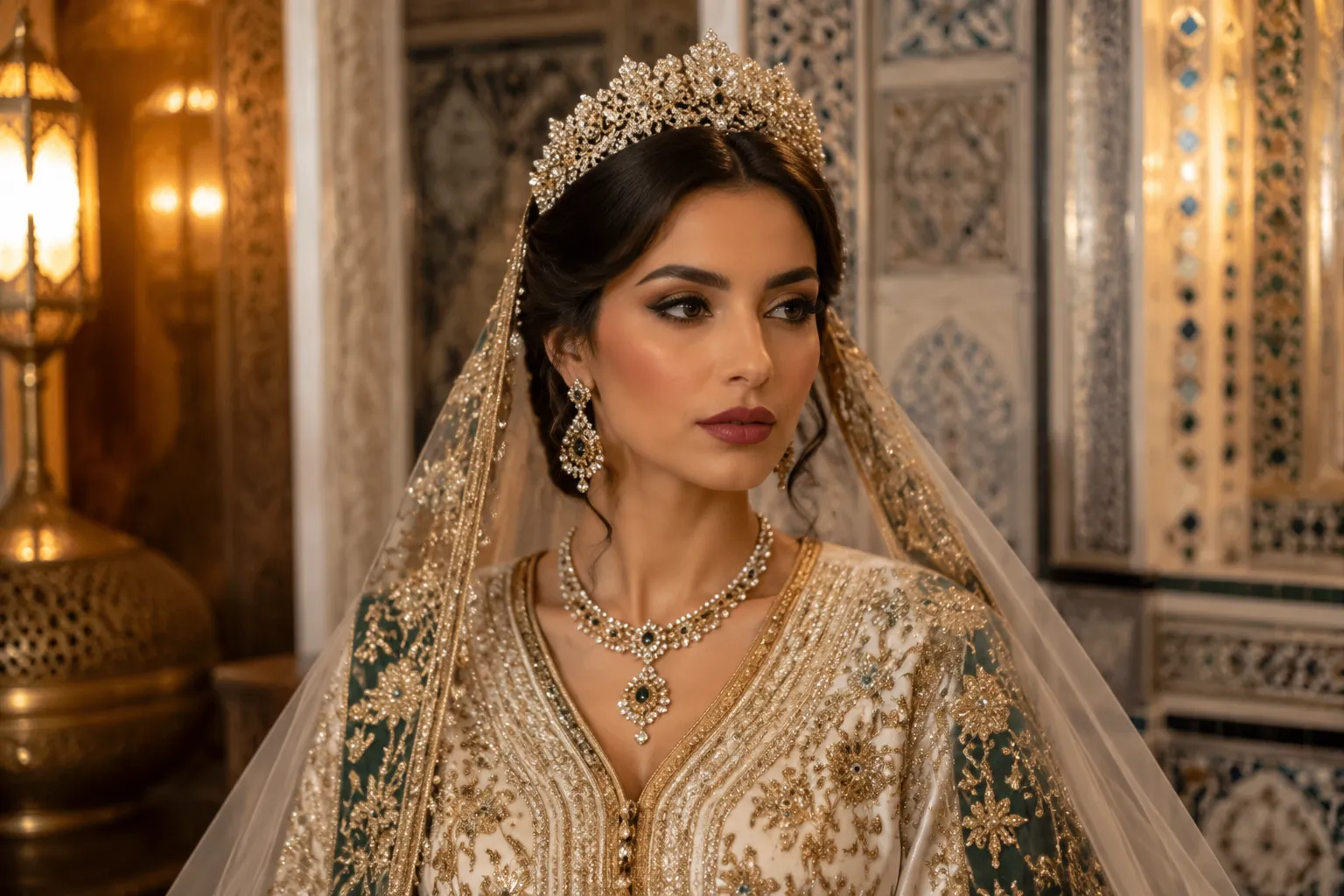
Start with the event moment rather than the product label. Decide whether the headpiece belongs with a henna-night ensemble, a caftan, a takchita, a reception entrance, family portraits, or a later outfit change. Then compare its height, width, ornament density, metal tone, face-framing effect, veil compatibility, attachment points, and planned wear duration.
Moroccan Bridal Headpiece Options
These are useful shopping and coordination categories, not fixed Moroccan cultural classifications.
Delicate Jeweled Headband
A delicate jeweled headband creates a lower-profile frame around the hairline or crown of the head. It may suit an outfit with detailed embroidery, pearls, lace, a decorated belt, or prominent jewelry.
This form can leave more of the face visible and may be easier to coordinate with a veil or scarf. Confirm whether the band sits over the hairstyle, beneath a veil, or in another agreed position.
Tall or Architectural Tiara
A tall tiara creates a more vertical silhouette and becomes a strong feature in photographs and entrances. It may suit a simpler robe or a look where the headpiece is intended to lead the styling.
Check its height against the neckline, sleeves, belt, and hair volume. Include walking, sitting, turning, greeting guests, and changing outfits in the fitting because the structure may affect each movement.
Ornate Bridal Crown
An ornate crown may combine dense beadwork, pearls, pendants, metalwork, colored stones, or floral and geometric decoration. Historical records of North African and Moroccan Jewish head adornment describe substantial crowns and diadems, but those examples belong to particular communities, periods, and ceremonial settings.
Use these records as cultural context and inspiration, not as proof that an elaborate crown is customary for all Moroccan brides. Ask the family or Neggafa whether a similarly detailed piece suits the intended celebration.
Lower-Profile Headpiece
A lower-profile piece adds decoration without competing with a highly detailed caftan or takchita. It may also suit a bride expecting several transitions, extended movement, or more than one outfit.
A smaller silhouette does not automatically make it the better choice. The base still needs to work with the planned hairstyle, veil, and attachment method.
Veil- or Scarf-Compatible Piece
Some families may include a scarf, veil, headband, diadem, or another form of hair covering or adornment for a particular ceremony or outfit. Historical Moroccan Jewish bridal ensembles, for example, include headbands and hair-covering elements within specific community traditions.
Do not transfer that historical practice to every Moroccan wedding. Confirm whether a veil or scarf belongs in the planned look, who places it, whether the headpiece remains visible, and whether the piece is removed during a later transition.
Match the Headpiece to the Outfit and Moment
Choose the celebration moment first. A crown selected for a henna ceremony may not serve the same purpose as one chosen for a reception entrance or formal portrait session.
For each possible piece, review four connections:
- Outfit: Compare the crown with the caftan, takchita, fabric, embroidery, belt, and neckline.
- Jewelry: Check whether the metal tone and ornament density balance the jewelry rather than creating competing focal points.
- Hairstyle: Confirm the available hair volume, extensions, braids, covering, and structural support.
- Movement: Consider transport, entrance choreography, dancing, greetings, sitting, photography, and outfit changes.
A takchita may include several coordinated elements, and terms such as tahtia, dfina, and mdamma can vary in how families, dressmakers, or sellers use them. Treat these words as prompts for a detailed conversation with the dressmaker rather than assuming that every provider means the same construction.
Decide whether the headpiece should lead the look or balance it. When the robe and mdamma already carry strong decoration, a delicate jeweled headband or lower-profile piece may create a more even arrangement. A quieter outfit may leave room for a taller or more ornate crown to provide the main emphasis.
Who Needs to Be Included?
Headpiece decisions often involve more people than the bride and seller. Clarify responsibilities before the wedding day.
- The bride: Sets the preferred silhouette, comfort limits, celebration moment, and personal style.
- The family: Confirms whether a particular type of adornment is expected, familiar, or appropriate for that celebration.
- The Neggafa: If involved, may coordinate clothing, jewelry, and transitions. The role differs, so confirm whether this person also handles the headpiece.
- The hairstylist: Plans the hairstyle, identifies workable attachment points, and checks the piece during a full trial.
- The dressmaker: Helps assess proportion with the caftan or takchita, belt, embroidery, and other garment details.
- The jewelry provider or seller: Supplies measurements, construction details, available adjustments, and delivery information.
- The photographer or venue team: May need the entrance, movement route, seating arrangement, and outfit-change timing.
Assign one person to carry approved adjustment supplies and identify who may reposition or remove the piece. Place that handoff before the photographs or outfit transition.
Bridal Crown Hairstyle Fit
Test the crown with the actual hairstyle, rather than with loose hair or a different trial style. Hair texture, extensions, braids, volume, the crown’s weight, and the position of its loops, combs, or other attachment points can all affect the fit.
- Place the intended hairstyle first.
- Add the actual crown or headpiece.
- Add the veil, scarf, or covering if one will be worn.
- Put on the intended caftan or takchita, or use a close substitute with similar volume.
- Check the front, sides, and back.
- Walk, turn, sit, greet someone, and lower the head.
- Recheck the piece after wearing it for a realistic interval.
Look for pressure, pulling, snagging, slipping, imbalance, or a visible conflict between the headpiece and the outfit. Ask the hairstylist for individualized attachment guidance because one placement method will not suit every hairstyle or headpiece.
Change the arrangement if the piece causes pain, pulling, snagging, or visible hair damage. These are fitting concerns to identify during the trial, not grounds for a universal comfort or attachment claim.
Crown Attachment Points and Backup Planning
Ask the seller or stylist to identify the headpiece’s actual attachment points. These may include loops, combs, pins, a band, or another base construction, but the appropriate method depends on the piece and hairstyle.
Confirm:
- Where the base should sit.
- Which parts of the hairstyle can support it.
- Whether the veil attaches separately or shares the same area.
- Whether the crown can be removed without dismantling the hairstyle.
- Who may adjust it during the celebration.
- Which approved spare supplies should travel with the bride.
- Where the piece will be stored between outfit changes.
- Who will remove it if the fit becomes uncomfortable.
A backup plan might include a lower-profile alternative, spare approved pins, a separate veil arrangement, or a named person responsible for adjustments. This is a coordination measure, not a promise that a particular attachment method will remain in place throughout an event.
Metal Tone and Ornament Balance
Compare the metal tone with the full outfit, rather than selecting it in isolation. Gold, silver, brass-colored details, pearls, colored stones, embroidery, and the mdamma may all contribute to the overall balance.
Photograph the actual robe and jewelry in similar lighting. Compare the crown beside the neckline, belt, earrings, and veil instead of relying only on a product image.
Check ornament density as well. A crown covered with pendants or stones may dominate an outfit with elaborate embroidery, while a simpler band may disappear beside a highly decorated garment. Neither result is universally correct; the intended emphasis should be agreed by the bride and the people coordinating the look.
Use labels such as “traditional,” “authentic,” “Moroccan,” or “handmade” carefully. Marketplace categories, inspiration boards, and seller descriptions can provide search vocabulary, but their labels do not establish Moroccan origin, customary use, provenance, symbolism, craftsmanship, comfort, or performance.
Moroccan Jewish Bridal Attire and Henna Ceremonies
The Jewish Museum collection record documents a Moroccan Jewish Grand Costume, also known as El-keswa el-kbira, associated with a henna ceremony. It shows how a head element can belong to a complete, ceremony-specific ensemble rather than functioning as an isolated accessory.
Historical and community-based material also describes Moroccan Jewish head adornment that may include diadems, embroidered elements, beads, pendants, and hair-covering forms. These references need to remain tied to their community, place, period, and ceremony.
They do not establish a universal Moroccan bridal crown, nor do they show that a particular tiara, veil, scarf, or wearing order is expected in a contemporary wedding outside that context.
For a Moroccan Jewish henna ceremony, ask which historical or family elements are being carried forward. Confirm whether the headpiece is an original family item, a reproduction, a modern interpretation, or simply a coordinated accessory for the event.
Questions to Confirm Before Ordering
- Which outfit and part of the celebration is this headpiece for?
- Is the family expecting a particular piece, or is the choice personal?
- Who has responsibility for coordinating the headpiece with the outfit and jewelry?
- Will it be worn with a veil, scarf, or hair covering?
- Will it remain in place through photographs, greetings, dancing, and transport?
- Will it be removed or changed during another outfit transition?
- Does the metal tone balance the dress, mdamma, and jewelry?
- How does the base attach to the planned hairstyle?
- Has the complete combination been tested while walking, turning, sitting, and wearing it for a realistic interval?
- Who will carry the approved adjustment supplies?
- Who may reposition or remove the piece during the event?
- What are the measurements, materials, attachment features, customization terms, return terms, repair options, and delivery timing?
The suitable Moroccan bridal crown is the one that fits the chosen moment and coordinated outfit while respecting the bride’s preferences and the family’s expectations. Confirm the cultural context locally, test the complete look before the event, and name the person responsible for adjustments or removal.
Sources
- Jewish North African head adornment: Traditions and Transition
- Marriage Dress The Grand Costume (El-keswa el-kbira)
- The Sephardi Berberisca Dress, Tradition and Symbology
- Multivocality in the Engagement Zone: A Participatory, Object-based Knowledge Creation Process with the Toronto Moroccan Jewish Community
- Customs, Traditions and Religious Occasions of the Moroccan Jews
- Tracing Trade and Settlement Infrastructures in the Judaic Material Culture of Tafilalt, Southeastern Morocco