Moroccan Bridal Crown Versus Veil Styling
A Moroccan bridal crown or headdress can be worn with a veil, but no single Moroccan rule fixes which piece sits above the other or goes on first. The workable arrangement depends on the bride's region, community, family practice, ceremony stage, hairstyle, crown construction, veil hardware, and intended visual emphasis.
Plan the choice as a fitting sequence: establish the context, test the actual pieces together, assign each handoff, and confirm when the veil or crown will be changed or removed.
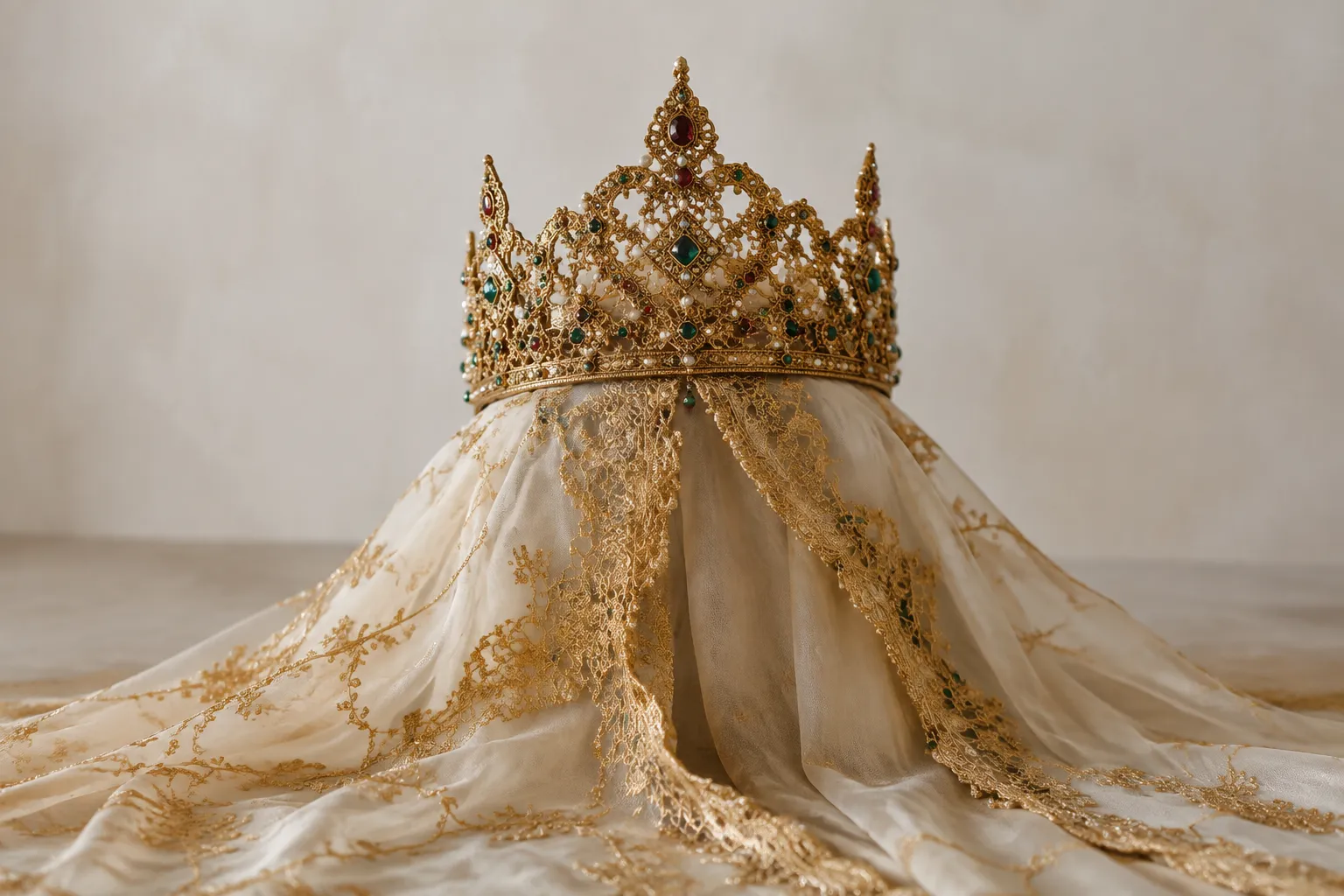
Which Comes First: The Crown or the Veil?
Several arrangements can work:
- Crown first, veil behind it: The crown remains prominent while the veil falls from the back or sits beneath the headpiece.
- Veil first, crown over the comb: The veil is attached to the hairstyle before the crown is positioned around the attachment point.
- Veil last: The hairstyle and crown are completed first, with the veil added for an entrance, portrait session, or particular ceremony moment.
These options should not be presented as a universal Moroccan custom. A heavy crown, flexible veil, split comb, veil loops, hair grips, or limited hair base can change the practical order. Ask which item should remain visible and who will install and remove each piece.
For this crown, veil, hairstyle, and ceremony stage, which item should remain visually dominant, and who will handle each handoff?
Begin With the Ceremony Stage
Identify where the look belongs before choosing Moroccan crown veil placement. A wedding may include a henna night, caftan or takchita changes, family portraits, an entrance, and a later reception sequence.
In some families, the headwear belongs to one outfit rather than the entire event. The veil may appear for an entrance and then be removed before another change, while the crown or headdress remains for a later presentation. Confirm the order with the bride and family instead of reading it from a photograph.
- Which region or community does the styling represent?
- Is the look connected to a family, Amazigh, Jewish Moroccan, Sephardi, urban, rural, historical, or contemporary practice?
- Which outfit or ceremony stage includes the crown?
- Should the veil cover the hair, frame the face, trail behind the bride, or appear only for photographs?
- Should the crown, veil, hairstyle, or jewelry carry the main visual emphasis?
- Who has final responsibility for the arrangement?
Historical records show variation across Moroccan marriage ceremonies and communities. That material helps with comparison within its historical setting, but it does not establish a current crown-and-veil order for every Moroccan wedding.
Test the Actual Pieces Together
Moroccan bridal crowns and headdresses can use cloth, embroidery, beads, pendants, silver or brass elements, stones, bands, and other decorative components. Their shape, weight, and attachment points affect how a veil can be positioned.
Bring these items to the fitting:
- The actual crown or headdress
- The actual veil
- The planned hairstyle
- Any veil comb, loops, split comb, grips, pins, or other hardware
- Jewelry intended for the same outfit
- A head covering or underlayer, if the look includes one
- The outfit, or a garment with a similar neckline and shoulder shape
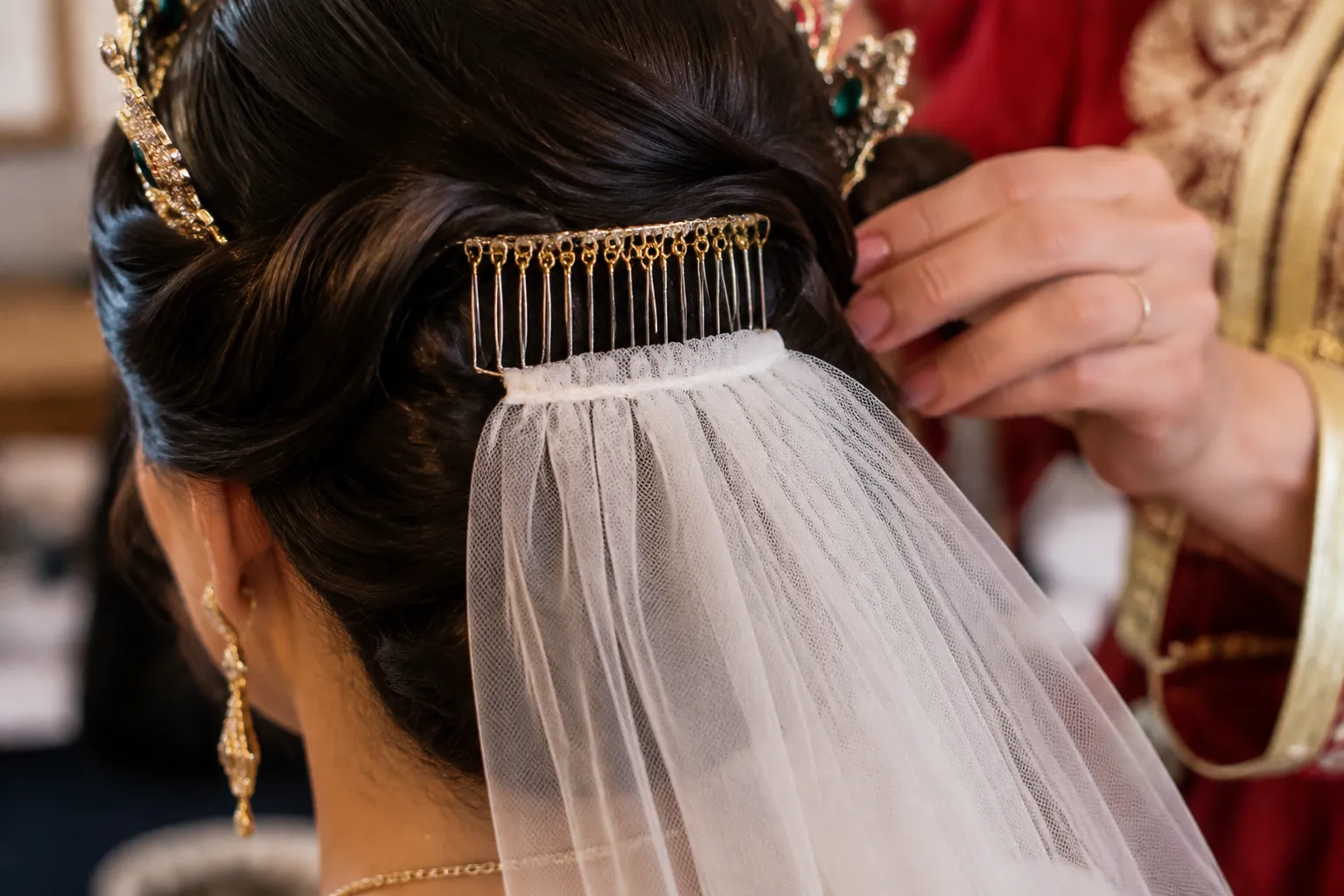
Test crown-first, veil-first, and veil-last arrangements with the finished hairstyle. A trial using another headpiece or a loose hairstyle may not show how the final pieces will sit.
Observe the arrangement while the bride turns her head, walks, sits, stands, looks down, greets relatives, receives guests, and moves through the planned entrance. Take front, side, and back photographs. Check pressure, shifting, visibility, hair tension, access to attachment points, and whether the veil covers the crown or jewelry from the angles guests and photographers will use.
These are general fitting considerations. They do not establish a Moroccan ceremonial requirement.
Choose the Visual Relationship
Crown as the Main Focal Point
Place the crown so its outline and decorative details remain visible. A veil behind the crown may keep the headpiece clear and the face unobstructed, although the hairstyle and attachment method still need to support its weight.
Veil as the Main Frame
Attach the veil to create the intended face-framing or trailing effect, then position the crown around the comb or attachment area. This can work when the veil is the principal covering or when the headpiece leaves enough clearance around the hardware.
Shared Emphasis
A lower crown, fabric band, or less projecting headdress may allow both pieces to remain visible. Photograph the result from the angles that matter. A balanced front view may hide the crown from the side or cover important jewelry details.
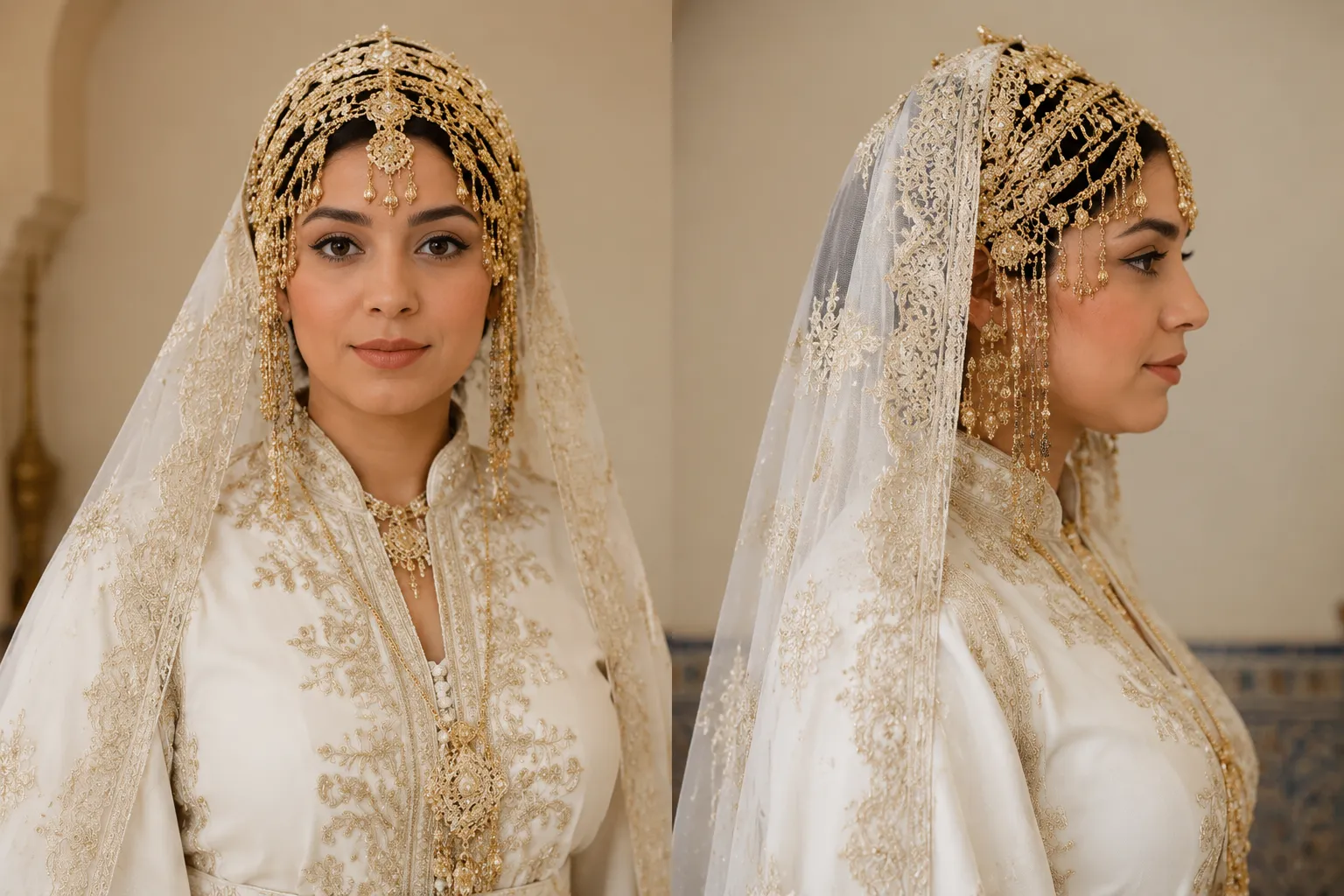
Do not assign meaning from appearance alone. A single image, retailer description, or social-media caption cannot establish one universal Moroccan meaning for a crown, veil, color, coin, stone, or placement.
Assign the Handoffs
A negafa, also written negaffa, may help coordinate clothing, jewelry, veils, makeup, hairstyles, and outfit changes. Responsibilities vary, so name the person handling each task before the wedding day.
| Task | Person to confirm |
|---|---|
| Supply the crown or headdress | Bride, family, negafa, or supplier |
| Supply the veil and hardware | Bride, veil supplier, negafa, or stylist |
| Complete the hairstyle | Hairstylist or designated stylist |
| Install the crown and attach the veil | Confirm during the fitting |
| Steady the headwear during the entrance | Negafa, attendant, or family member |
| Change the arrangement between outfits | Named person with access to the hardware |
| Remove and store each piece | Named person after the relevant stage |
The person who supplies an accessory may not be the person who installs or removes it. Record the responsibility in the timeline, especially when several caftan or takchita changes are planned.
Confirm the Removal Point
A 1997 ethnographic account from Merzouga describes one Amazigh bridal headdress, including its construction and removal at the end of a wedding ceremony. It documents a regional and ceremony-specific practice, not a present-day instruction for every Moroccan bride.
Specify the cue in your own schedule:
- Before leaving the bridal room
- After the entrance
- Before family portraits
- During a caftan or takchita change
- Before dancing or other movement-heavy activities
- At the end of the wedding ceremony
- After the photographer confirms the required images
Set aside a clean place for the crown, veil, pins, and combs. If the headpiece is heavy or layered over a veil attachment, allow time for removal without disturbing the hairstyle or jewelry.
Keep Community-Specific Examples Distinct
Moroccan bridal dress includes regional, religious, historical, and family contexts that should not be merged into one generic styling rule. Amazigh documentation, Jewish Moroccan and Sephardi studies, and historical records can show variation without prescribing how a contemporary couple should combine a crown and veil.
The term aâbroq appears in scholarly material as a Moroccan bridal headdress term, but the available material does not establish a present-day crown-and-veil sequence. Jewish Moroccan and Sephardi sources describe community-specific head coverings, bands, crowns, and jewelry, including the Berberisca dress associated with northern Moroccan Jewish celebrations.
Terms found in online discussions, such as sfifa or taj, need independent museum or scholarly confirmation before being used as established terminology for a particular bridal arrangement. Algerian fashion, Spanish mantilla styling, Palestinian headdress symbolism, Western tiara advice, and Pinterest imagery may explain some reader expectations, but they cannot define Moroccan practice.
Final Fitting Checklist
- Region, community, family preference, and ceremony stage
- Item that should remain visually dominant
- Whether the crown sits above, below, or around the veil attachment
- Installation order for the actual hairstyle and hardware
- Number and position of grips, pins, loops, or combs
- Access to attachment points during a change
- Stability while walking, sitting, turning, and greeting guests
- Visibility of the crown, jewelry, face, and hairstyle
- Person responsible for the entrance, outfit change, removal, and storage
- Photographs required before removal
Message for the Negafa or Stylist
Use a precise question rather than requesting a general “traditional” look:
We are planning a [community or family context] bridal look for [outfit or ceremony stage]. The bride will wear this crown, this veil, and this hairstyle. Should we test the crown first with the veil behind it, the veil first with the crown over the comb, or a veil-last arrangement? Who will supply the hardware, install each piece, steady it during the entrance, manage the change, and remove it? Please confirm the timing and bring the actual pieces for the fitting.
A Moroccan bridal crown and veil can be coordinated successfully through more than one arrangement. The decision should follow the actual pieces, the relevant family or community context, and the ceremony timeline, with a named person responsible for every installation and removal point.
Sources
- Amazigh Arts in Morocco: Women Shaping Berber Identity
- Jewish North African head adornment: Traditions and Transition
- The Sephardi Berberisca Dress, Tradition and Symbology
- Marriage ceremonies in Morocco
- Wedding Dress Across Cultures
- Amazigh Feminism Narratives: Aspirations, Agency, and Empowerment of Amazigh Women in the Southeast of Morocco
- تصميم وتنفيذ نماذج لمکملات فستان الزفاف " طرحة الزفاف " للإستفادة منها في تنمية المشروعات الصغيرة