Moroccan Bridal Dressing Room Setup For Caftan Changes
A practical Moroccan bridal dressing room setup separates the active changing area from staged outfits, accessories, valuables, and removed garments. Assign one person to each handoff, limit entry, and prepare every confirmed look before guests arrive.
The arrangement depends on the bride’s clothing, family preferences, venue, and wedding team. Confirm the order with the bride and any dresser or negafa, a wedding attendant who may coordinate clothing and presentation. There is no universal number or order of caftan changes.
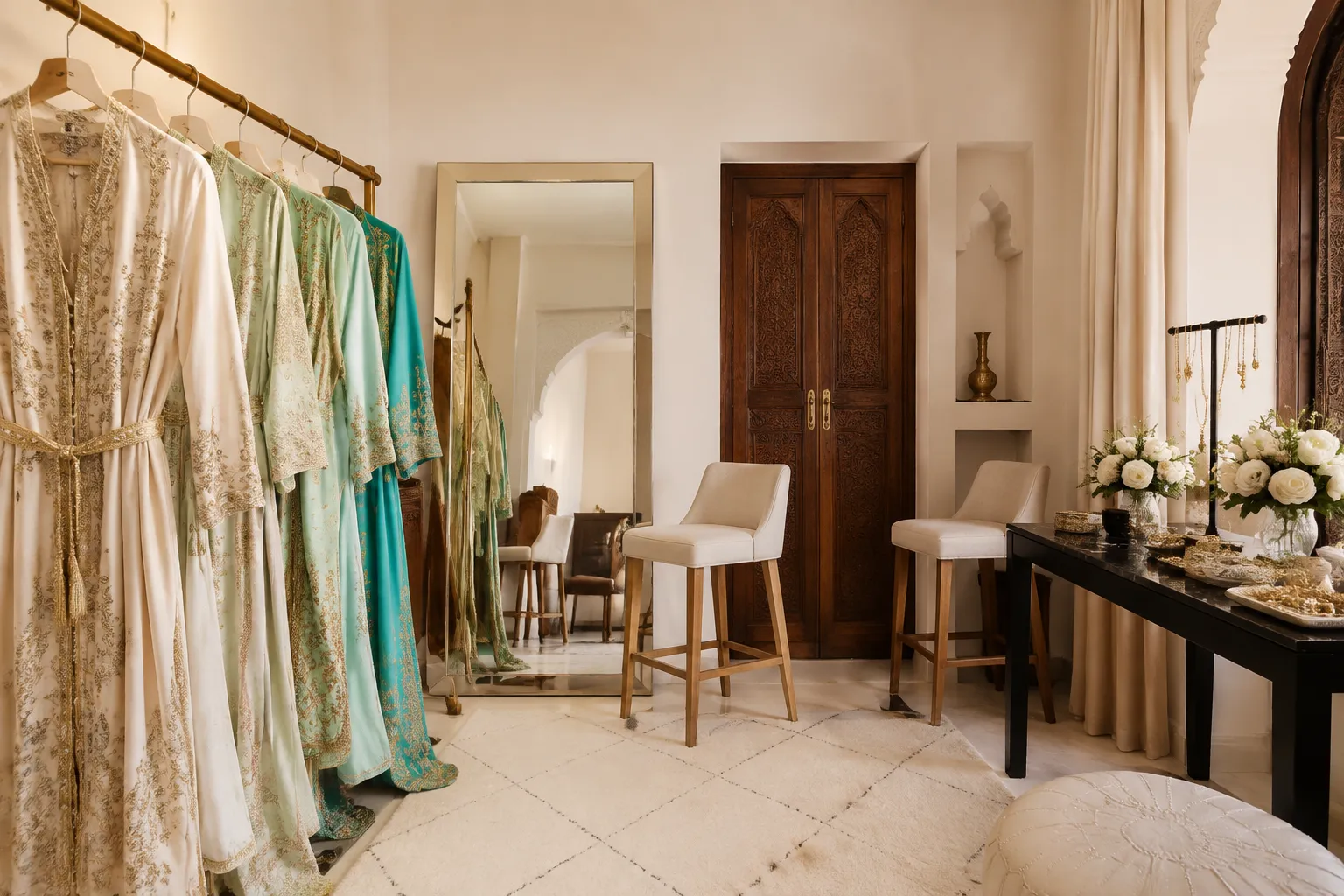
Start With the Caftan Change Plan
Build the room around planned transitions, not a generic bridal checklist. Record each complete look in order, together with the cue that starts the change and the event that follows it.
For every look, identify:
- The caftan, takchita, or other garment
- The belt, fastenings, shoes, jewelry, and headpiece
- Any planned hair or makeup adjustment
- The people permitted to assist or photograph
- The person responsible for removed clothing and valuables
- The route between the reception and dressing room
- The cue for leaving and returning
Research on Moroccan weddings and clothing documents meaningful variation among families, communities, locations, and diaspora settings. It does not establish a standard changing-room procedure, staffing level, or outfit order.
Choose a Private Changing Space
Look for a room with a controllable entrance and enough clear space for the bride and assigned helpers to move around the garments. Its route to the reception should also avoid unnecessary guest and service traffic.
Walk that route after discussing the venue’s event layout. Check doorways, stairs, waiting points, service corridors, and any place where a wide or structured outfit may be difficult to manage.
Ask the venue:
- Who controls the room key or entry
- Whether staff will need access during the event
- Which racks, tables, chairs, mirrors, and outlets are available
- Whether steaming or pressing equipment may be used
- When staging may begin and when the room must be cleared
- Whether food, drink, deliveries, or staff regularly pass through the space
A shared restroom rarely provides orderly garment staging or reliable privacy. If no separate room is available, discuss a screened area and a clear access plan with the venue.
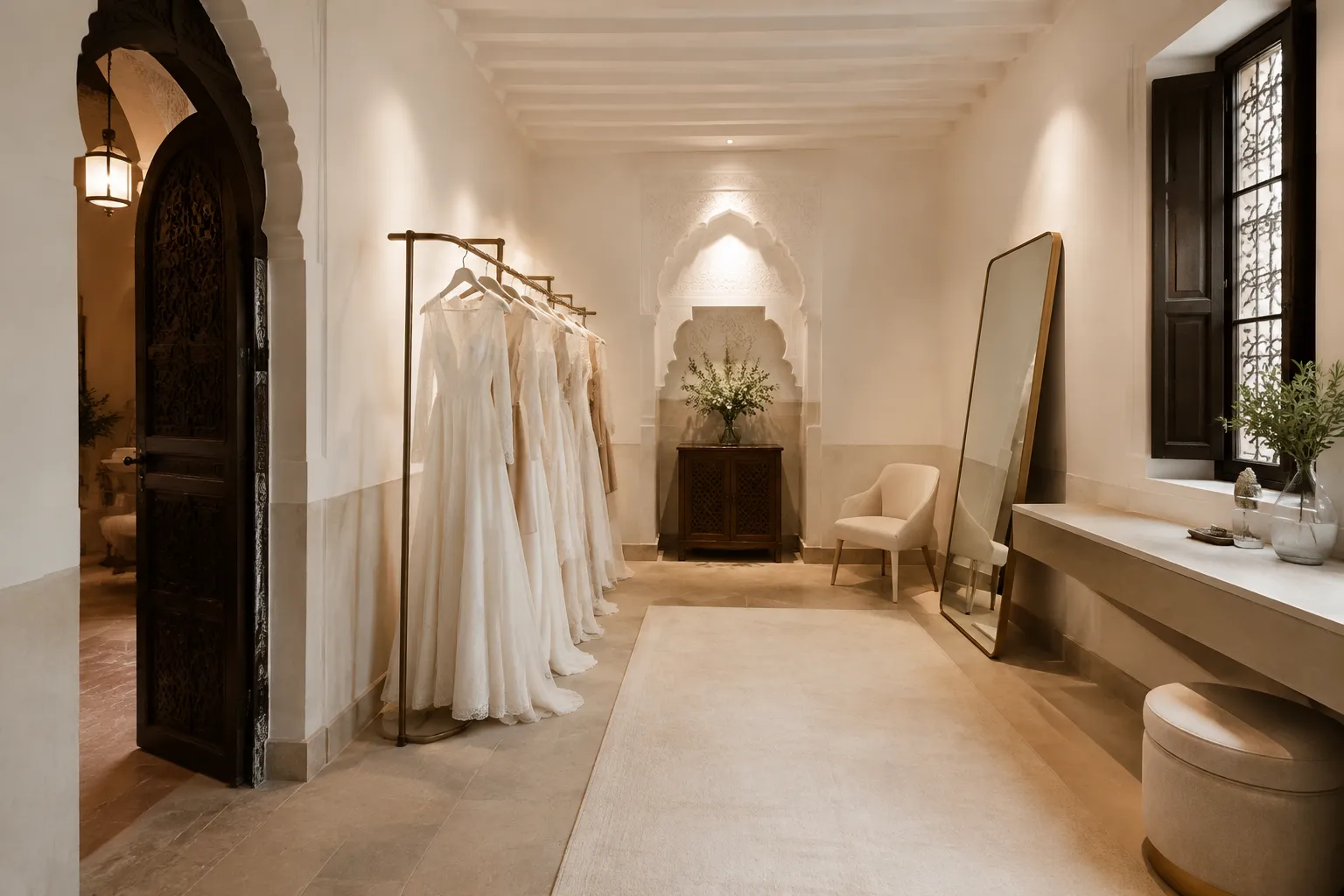
Arrange the Caftan Change Room
Keep the entrance clear
Leave open space inside the door and keep garments, bags, and jewelry away from it. The person managing entry should know when the room closes to everyone except active helpers.
Reserve an active changing zone
Use the most private part of the room for dressing. Remove spare furniture, cases, decorations, and loose cables that obstruct movement.
Place a stable chair where it can be reached without touching hanging clothes. Check the position while accounting for the widest planned outfit.
Stage one complete look at a time
Put the next outfit nearest the active area and keep later looks separate. Give each look its own rack position, garment bag, tray, or labeled surface.
Group accessories by outfit rather than by item type. Keeping a belt, jewelry, shoes, and hairpiece together reduces searching during the change.
Set up mirrors and useful lighting
Provide a clear front view and, where available, another angle for the back and sides. Check the room under its actual event lighting so helpers can see closures, hems, belts, and accessory placement.
Research on bridal boutiques discusses dedicated fitting areas with multiple mirrors, lighting, and coordinated accessories. That offers a limited spatial comparison, not evidence of a Moroccan wedding custom.
Separate outgoing garments
Give removed clothing its own rack position or protected surface. Keep every outgoing look together, including its loose fastenings and accessories, rather than returning it to the staging area.
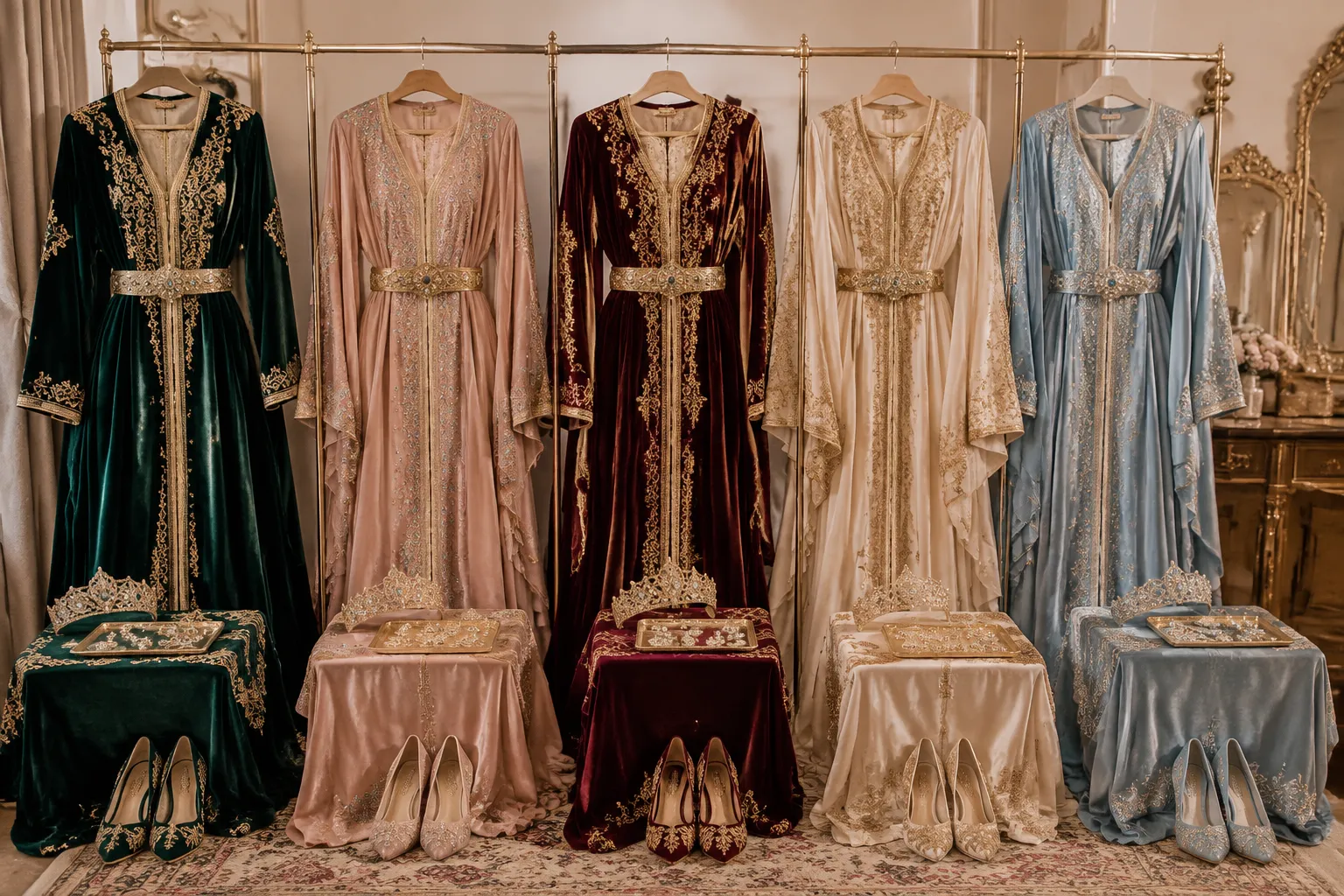
Stage Each Caftan as a Complete Look
Follow the bride’s confirmed order of appearance. Do not arrange garments by color, value, or unpacking convenience when that conflicts with the reception sequence.
- Confirm the final outfit list and order with the bride.
- Record the cue associated with each change.
- Inspect each garment with its assigned handler.
- Group the clothing, belt, shoes, jewelry, and accessories.
- Note any component requiring particular handling.
- Place the next change in the nearest staging position.
- Prepare a separate destination for the removed outfit.
- Complete a final inventory before restricting access.
A written inventory is useful when garments and accessories come from several relatives or providers. With the bride’s approval, the team may also photograph each staged group for private reference.
Do not apply labels, adhesives, clips, or pins directly to clothing without instructions from its provider. Record how each garment should be hung, folded, transported, and returned.
Assign the Dressing Room Roles
Keep the active group small. Several responsibilities may belong to one person, but each task should have one named owner.
| Role | Responsibility | Detail to settle |
|---|---|---|
| Bride | Approves outfits, helpers, privacy, and photography | Final order and personal boundaries |
| Change lead | Directs dressing and checks the completed look | Whether this is a negafa, dresser, relative, or another chosen person |
| Garment handler | Prepares the next garment and receives the previous one | Handling, storage, and return instructions |
| Access lead | Controls the door and prevents interruptions | Approved names and venue access needs |
| Jewelry custodian | Presents and receives jewelry and other valuables | Transfer method and final recipient |
| Timing contact | Exchanges cues with the reception team | Who sends updates when timing changes |
| Room reset lead | Secures the removed look and prepares the next one | Storage locations and missing-item reporting |
Do not assume that a negafa will be present or responsible for every task. When one is engaged, clarify garment preparation, jewelry custody, timing, and coordination with other participants.
Control Access and Photography
Set the entry rules before the celebration so the bride does not have to make access decisions while changing. Divide people into three practical groups:
- Working access: people assigned to the current change
- Call-in access: hair, makeup, photography, or relatives invited for a specific moment
- No routine access: guests, unassigned relatives, deliveries, and vendors without a room task
Photography requires a separate agreement. Specify whether images may show garment preparation, family assistance, the completed look, or no part of the changing process. A broad request for behind-the-scenes coverage does not define privacy boundaries.
Run Each Outfit Handoff
Before the bride arrives
The timing contact receives the reception cue. The change lead checks the room, the garment handler prepares only the next look, and unnecessary people leave.
During the change
The change lead directs the order of removal and dressing according to the bride’s preferences and garment instructions. Other helpers wait for a defined task instead of working around the bride at the same time.
If the change takes longer than expected, the timing contact updates the reception team. This keeps schedule discussions outside the active changing area.
Before re-entry
Check the outfit from the front, sides, and back. Review the belt, closures, hem, shoes, jewelry, hair, and headpiece, then wait for the bride’s approval and the next reception cue.
After the bride leaves
Collect every part of the removed look, place it in the outgoing area, and note anything missing. Clear the chair and work surface before moving the following outfit into position.
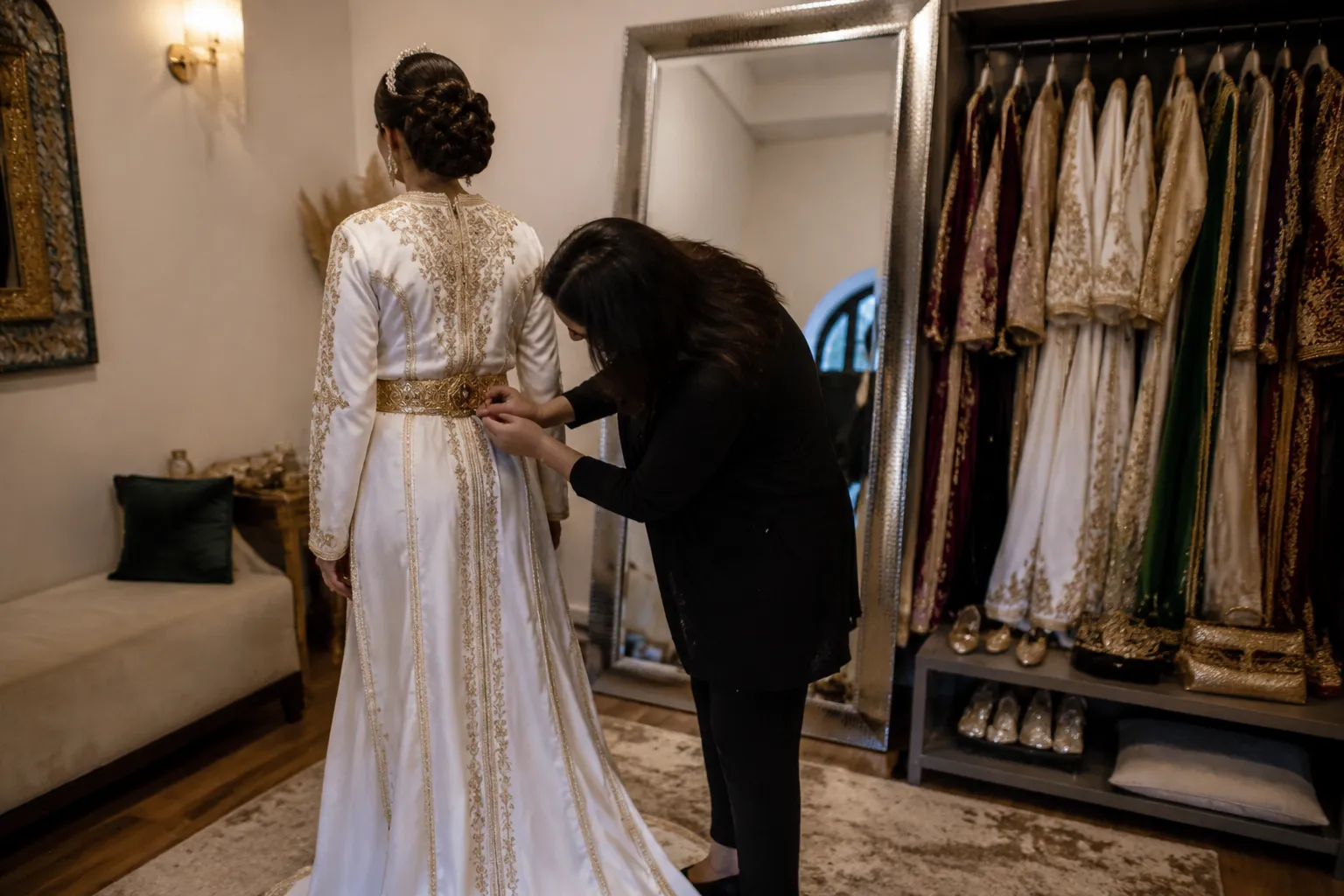
Prepare Supplies for Known Needs
Keep a compact supply station based on the garments being worn. Ask the garment provider, dresser, or negafa what may be used with each fabric and fastening.
- Replacement components supplied with the garments
- A sewing kit for the assigned handler
- Scissors stored away from open clothing
- Clean cloths, tissues, and suitable lint-removal tools
- Approved hair and makeup products
- Labeled bags for loose accessories and personal items
- A printed outfit order and contact list
- Water placed away from clothing, jewelry, and electrical equipment
Arrange steaming, pressing, or last-minute alteration support beforehand. Do not assume that equipment or assistance will be available at the venue.
Allow Time for the Transition
There is no documented standard duration for a Moroccan bridal caftan change. The garment, accessories, route, helpers, photography plan, and bride’s preferred pace all affect timing.
Use a rehearsal to find missing items, difficult closures, unclear responsibilities, and slow communication. It should inform the reception plan without being treated as an exact prediction.
Before finalizing the schedule, ask:
- Who sends the bride’s change cue?
- Who accompanies her to and from the room?
- Which accessories come off first, and who receives them?
- When may hair, makeup, or photography contacts enter?
- Who tells the reception team that the bride is ready?
- Which part of the program can continue during a longer transition?
Use one communication channel for timing updates. Musicians, entertainment staff, photographers, and relatives directing the next entrance should receive the same cue.
Final Dressing Room Checklist
- The number and order of planned looks are settled.
- Each garment has an identified owner or provider.
- Belts, shoes, jewelry, and accessories are grouped by look.
- Handling, storage, and return instructions are recorded.
- The room and reception route have been inspected.
- Door control and any venue access needs are understood.
- Dressing assistants and valuables custody have named owners.
- Photography timing and privacy boundaries are agreed.
- Mirrors, lighting, seating, racks, and work surfaces are available.
- The cue system and delay contact are clear.
- Every removed outfit has an assigned destination.
- The room reset and final departure plan are assigned.
Available research does not define room dimensions, staffing ratios, change durations, outfit orders, or access rules for Moroccan bridal caftan changes. Treat this setup as an adaptable operating plan, then settle the final handoffs with the bride, garment handlers, venue, and reception team.
Sources
- A Moroccan wedding ceremony between tradition and modernity: the role of women in the preparations
- Gender, Identity and Moroccan Weddings: The Adornment of the Ait Khabbash Berber Bride and Groom
- A Common Motivation—a Specific Style for Each Culture: Towards a Comparison of Wedding Rituals in Morocco
- Reformulating tradition and modernity: Moroccan migrant women and the transnational division of ritual space
- Who Are You Wearing? A study of Moroccan fashion discourse, identity performance, and social change
- Surviving or thriving? Unraveling the business resources enabling competitive advantage in locally owned bridal boutiques