Moroccan Bridal Hair And Makeup Timeline For Caftan Changes
Build the timeline from the bride’s first fixed appearance, not from the beauty appointment. List each caftan or takchita look, assign every dressing handoff, then work backward from the venue call time, departure, entrance, or photography window.
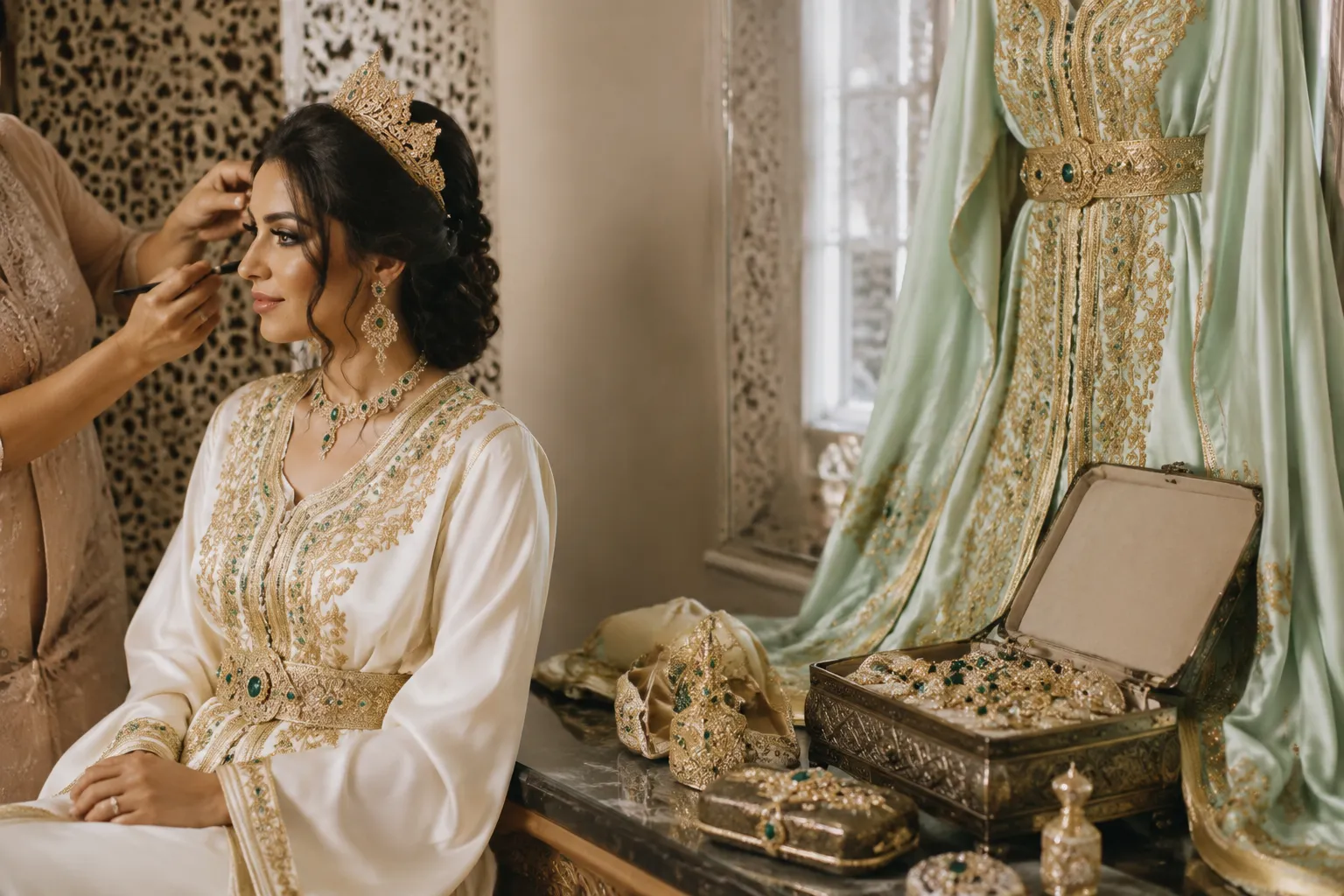
There is no single documented Moroccan schedule that fixes the number of outfit changes, their order, or the length of each transition. Families, regions, communities, venues, negafa arrangements, and personal preferences can shape the day differently. Use the framework below to organize the work, then confirm the actual order with the people involved.
Start With The Fixed Moments
Write down the moments that cannot move easily:
- When the bride must be fully dressed for the first appearance
- When she leaves the preparation space
- The first photography window
- A planned entrance or amaria procession
- When guests should see a particular look
- Dinner, tea service, family portraits, or another reception milestone
- When the final look must be ready
- Travel time between the preparation space and venue
General wedding-planning guidance sometimes uses a two-to-three-hour initial hair and makeup block as a starting estimate. That is a generic planning reference, not a Moroccan standard or a fixed appointment length. Hair condition, makeup complexity, staffing, travel, accessories, and the first outfit can all change the estimate.
Use this calculation for each major look:
Required appearance time minus dressing and accessory time, photography or entrance preparation, travel, and transition buffers equals the latest workable beauty finish time.
A complete hairstyle change needs a different allowance from a lipstick, powder, veil, or accessory adjustment. Keep those two types of work separate from the beginning.
Make A Look-by-Look Plan
Create one row for every appearance. Add a separate row for a henna event when it takes place on another day or uses a different beauty plan.
| Look | Clothing and accessories | Hair and makeup action | Handoff owner | Following moment |
|---|---|---|---|---|
| Preparation or first look | First caftan, takchita, or chosen outfit | Initial hair and makeup | Beauty team and named family representative | Private portraits or departure |
| Main entrance look | Outfit, belt, jewelry, headpiece, or veil | Refresh or full transition, depending on the design | Negafa, dresser, or agreed styling lead | Entrance, including an amaria where planned |
| Later reception look | Next caftan or takchita and accessories | Minor refresh or full restyle | Named dressing team | Guest-facing appearance or portraits |
| Final look | Last outfit and finishing pieces | Final touch-up and accessory check | Beauty team and dressing lead | Farewell, final portraits, or departure |
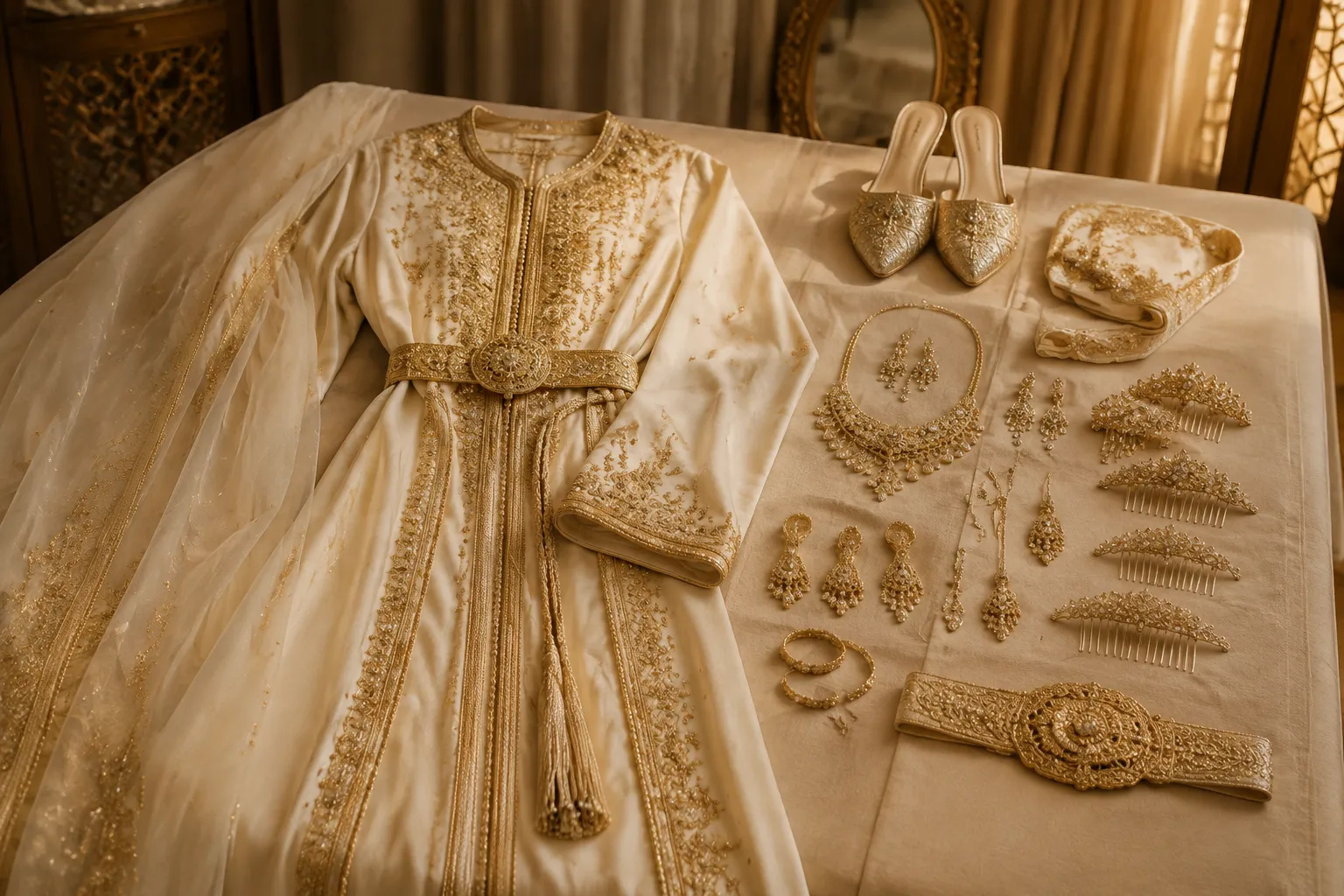
The terms caftan and takchita may overlap in everyday use, while the garments selected vary by family, region, community, and occasion. Neither term establishes how many times a bride changes or who manages the change.
Some planning materials use tduwira when discussing multiple bridal outfit changes. Available sources do not establish one consistent general definition or sequence, so ask the local team which term they use and what each transition includes.
Separate A Refresh From A Full Transition
This distinction keeps the beauty schedule from becoming too optimistic.
Minor Refresh
- Reapplying lipstick or gloss
- Blotting or adjusting complexion makeup
- Reworking a few loose strands
- Changing a hair accessory
- Adjusting a veil, scarf, belt, or headpiece
- Checking makeup after an entrance or portrait session
Full Transition
- Removing and rebuilding the hairstyle
- Changing the part, extensions, volume, or hair structure
- Replacing substantial headwear or ornamental pieces
- Creating a different makeup design
- Reworking the face after heat, movement, tears, food, or a long reception
- Coordinating a complete clothing and jewelry change
Ask the beauty team to estimate these categories separately. A schedule that labels every change as a “touch-up” may leave too little time for hair removal, accessory handling, or dressing assistance.
Assign Each Handoff
The bride should not have to coordinate beauty, clothing, photography, and family cues while changing looks. Choose one schedule owner who can make the next call and communicate with the other teams.
- Bride: Approves the look order, comfort priorities, and final style choices.
- Beauty team: Estimates the initial service and identifies which later looks need a refresh or full restyle.
- Negafa: May coordinate dressing, accessories, outfit changes, and entrances in some arrangements. Confirm the exact role.
- Dresser or designated family member: Prepares clothing, fastenings, jewelry, belts, shoes, and headpieces in use order.
- Family representative: Confirms family preferences, gathers relatives for portraits, and communicates changes affecting the event.
- Photographer: States when each look must be ready and which portraits happen before or after a transition.
- Planner or schedule owner: Maintains the master timeline and protects the buffers.
- Venue contact: Confirms room access, movement routes, entrance cues, and the latest practical arrival time.
One person may hold several roles. The useful safeguard is a named owner for every clothing, accessory, beauty, photography, and movement handoff.
Place Beauty Around Dressing
Dressing can affect the beauty sequence in both directions. A garment that passes over the head may need to be put on before certain hair pieces or finishing touches, while a structured headpiece, veil, or jewelry set may need to wait until the clothing is secure.
Before the event, confirm:
- Which garments can be removed without disturbing the hairstyle.
- Whether the bride changes in the same room or moves elsewhere.
- Who adds each accessory: the negafa, dresser, beauty team, or family member.
- Whether the beauty team remains present for every transition.
- Where emergency hair and makeup supplies will stay.
- Whether the photographer needs detail images before the outfit is worn.
- Whether each look needs a full portrait session or only a short entrance window.
Keep each outfit, accessory set, and reference image together. Arrange the looks in use order, while leaving room for a family or vendor decision to change that order.
Use Photography And Entrances As Anchors
Photography belongs in the timeline before the beauty appointment is booked. The photographer may need detail images, individual portraits, family portraits, or an entrance sequence, and each moment can change whether a refresh happens before or after the next caftan change.
For every look, identify:
- When the bride must be camera-ready
- Where the portraits take place
- Which relatives need to join group photographs
- How long movement between spaces takes
- Whether guests will already be present
- Whether the look leads directly into an entrance or amaria procession
- Whether the bride can return for a refresh afterward
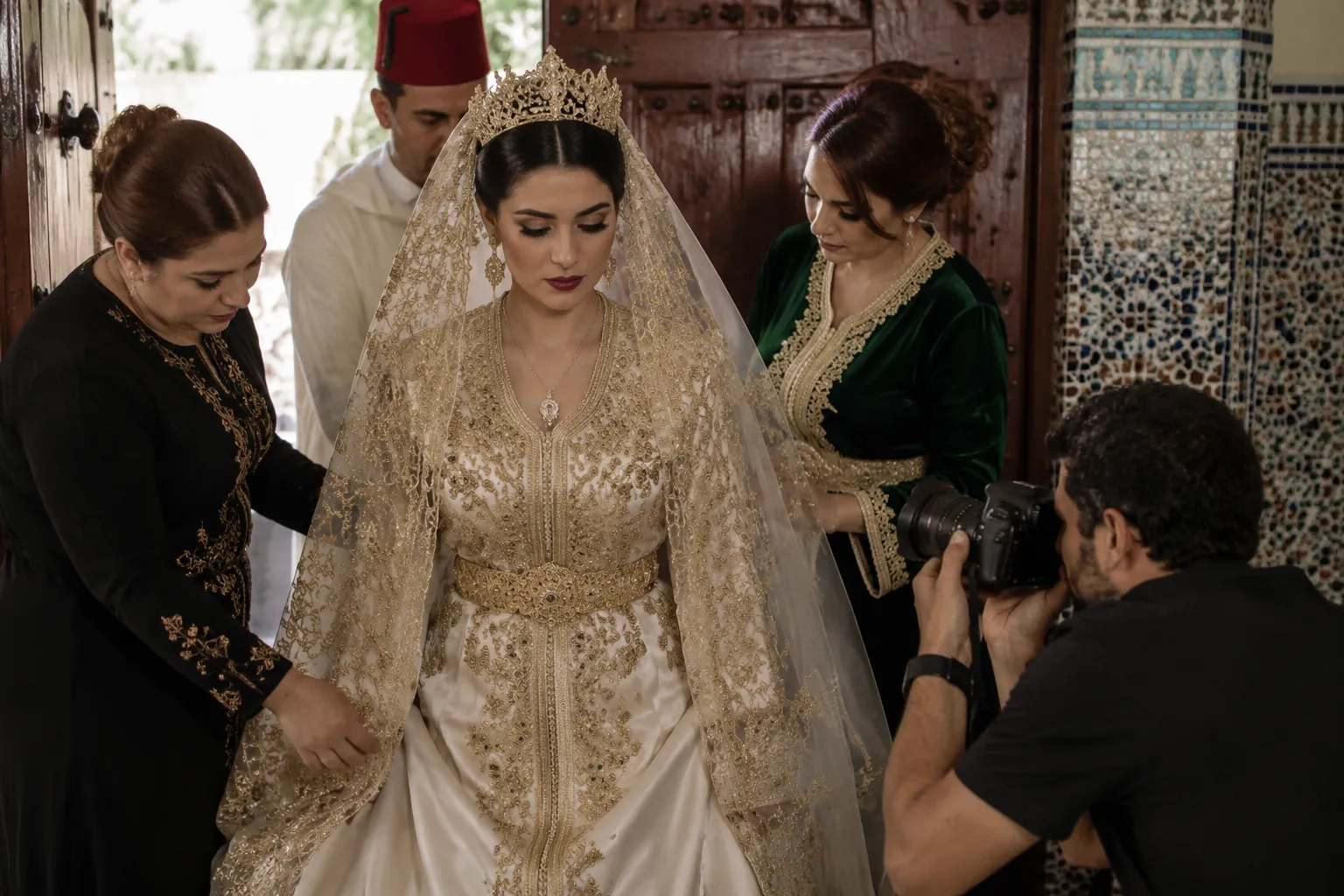
An amaria is described in some accounts as a prominent bridal entrance or procession element. Its presence does not determine the beauty order. Confirm whether the bride enters in a newly completed look, stays in the previous look, or receives only an accessory and makeup check beforehand.
Use Placeholder Times Until Teams Confirm
- T minus 4 hours: The beauty team begins or completes initial services, depending on the style and staffing.
- T minus 2 hours: Confirm the first look, accessories, clothing order, and transport readiness.
- T minus 90 minutes: Complete the first dressing handoff and let the beauty team inspect the finished look.
- T minus 60 minutes: Photograph the first look or move to the agreed portrait location.
- T minus 30 minutes: Protect the entrance or venue call time and avoid adding unplanned services.
- Call time: The bride arrives, is positioned, or prepares for the first guest-facing moment.
- Between looks: Record whether the next change is a refresh or full transition, then add dressing, accessory, photography, and movement time.
- Before the final appearance: Reserve a final touch-up and confirm the next cue with the schedule owner.
These are planning positions, not universal clock times. Replace each placeholder with the booked team’s estimate and the venue’s actual movement requirements.
Keep A Henna Event Separate When Needed
A henna night may be a separate event, part of the same celebration, or one element within a longer sequence. Accounts of Moroccan wedding preparation also describe family participation and preparation rituals surrounding the bride; one report describes hammam preparation with female relatives or future in-laws in that observed setting.
That material supports a possible relationship between preparation, family participation, and styling. It does not establish a required hammam visit, a fixed order, or a beauty outcome for all brides.
Create a separate beauty schedule when the henna event occurs on another day. Confirm:
- Whether the bride uses the same beauty team
- Whether henna is applied before or after makeup
- Whether the hair remains simple for the ceremony
- Whether the next day’s styling needs a full reset
- Whether clothing and accessories are shared between events
- Whether travel or rest affects the following appointment
Henna colors, clothing choices, and ceremony details vary. A green-and-gold look may appear in one example, but it is not a requirement.
Keep Regional And Family Variation Visible
Moroccan wedding customs differ across regions, communities, historical periods, family settings, and diaspora contexts. Some celebrations may include a henna evening, several clothing changes, an amaria entrance, or multiple event days. Others may combine events, use fewer looks, include a white gown, or incorporate regional or Amazigh dress.
Historical and community-specific sources must remain within their own scope. Material about Sephardi Jewish bridal dress in northern Moroccan communities describes a particular tradition; it cannot establish a general sequence for Moroccan Muslim, Amazigh, or other Moroccan families. Contemporary caftan research can help explain changes in occasion clothing and identity, but it does not document a fixed number of bridal looks or a standard dressing duration.
Common is not the same as universal. Treat the family’s proposed order as the working plan, then confirm it with the people who will carry out each transition.
Message To Send The Team
Which look comes first, and when must the bride be fully dressed for it?
Is each later change a minor refresh or a full hair and makeup transition?
Who handles the clothing, jewelry, belt, veil, and headpiece handoff?
Where does each change take place, and how long does movement between spaces take?
When does the photographer need each look ready?
Does an entrance or amaria follow any transition?
Who controls the final call time if one service runs late?
Is the henna event separate from the main wedding, and does it need its own beauty schedule?
Which timing estimates come from the booked team, and which remain provisional?
Write the answers into one shared schedule. That gives the Moroccan bridal hair makeup timeline enough flexibility for caftan changes, dressing handoffs, entrances, photography, and family preferences without treating one family’s order as a universal Moroccan wedding pattern.
Sources
- Kaftans and hammams: An inside look at Moroccan weddings
- Marriage ceremonies in Morocco
- The Sephardi Berberisca Dress, Tradition and Symbology
- Henna, Uses of it in the Middle East and North Africa
- Who Are You Wearing? A study of Moroccan fashion discourse, identity performance, and social change
- How Long Does Hair and Makeup for a Wedding? Timeline Template
- The Perfect Getting-Ready Timeline for Your Wedding Day