Moroccan Wedding Caftan Change Photo Checklist
Before the wedding, create one confirmed sequence sheet for the Moroccan caftan change photos. Record each look, who coordinates the change, where it happens, which people should appear, the permitted photography stages, and the photographs that matter most.
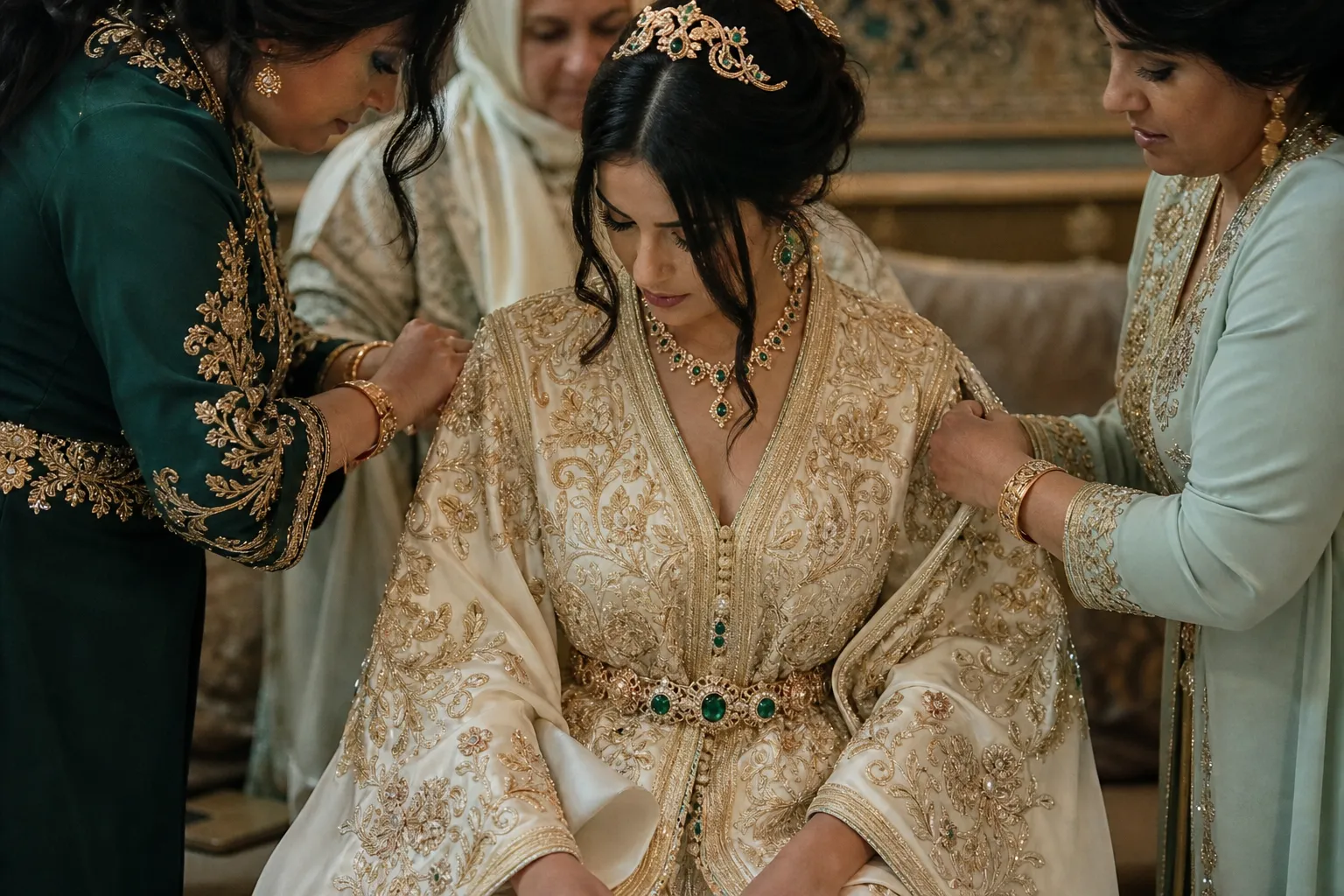
The number and order of looks, outfit names, attendants, styling arrangements, and timing can vary by family, region, venue, and celebration format. Use the checklist as a planning framework, then confirm the actual arrangement with the couple, family, negafa, stylist, photographer, and venue.
Build the Sequence Sheet
Give each planned look one line in a shared note or table. Leave uncertain fields open instead of filling them with an assumed order.
| Look | Family-confirmed name | Change location | Styling support | People to include | Priority images |
|---|---|---|---|---|---|
| 1 | __________ | __________ | __________ | __________ | __________ |
| 2 | __________ | __________ | __________ | __________ | __________ |
| 3 | __________ | __________ | __________ | __________ | __________ |
For every change, note whether the look is a caftan, takchita, or another family-specified outfit. Also record who starts the change, who helps with dressing and accessories, whether preparation photography is permitted, when the couple returns to guests, and whether the images should be candid, directed, or private.
Mark each field as confirmed, possible, or example. This keeps a photographer's usual workflow from being mistaken for a family requirement.
The family has confirmed two photographed caftan looks. The order, dressing room, attendants, and return time still need confirmation.
Choose the Photographs for Each Look
A single outfit change can produce several kinds of images. Prioritize them before the reception schedule becomes crowded.
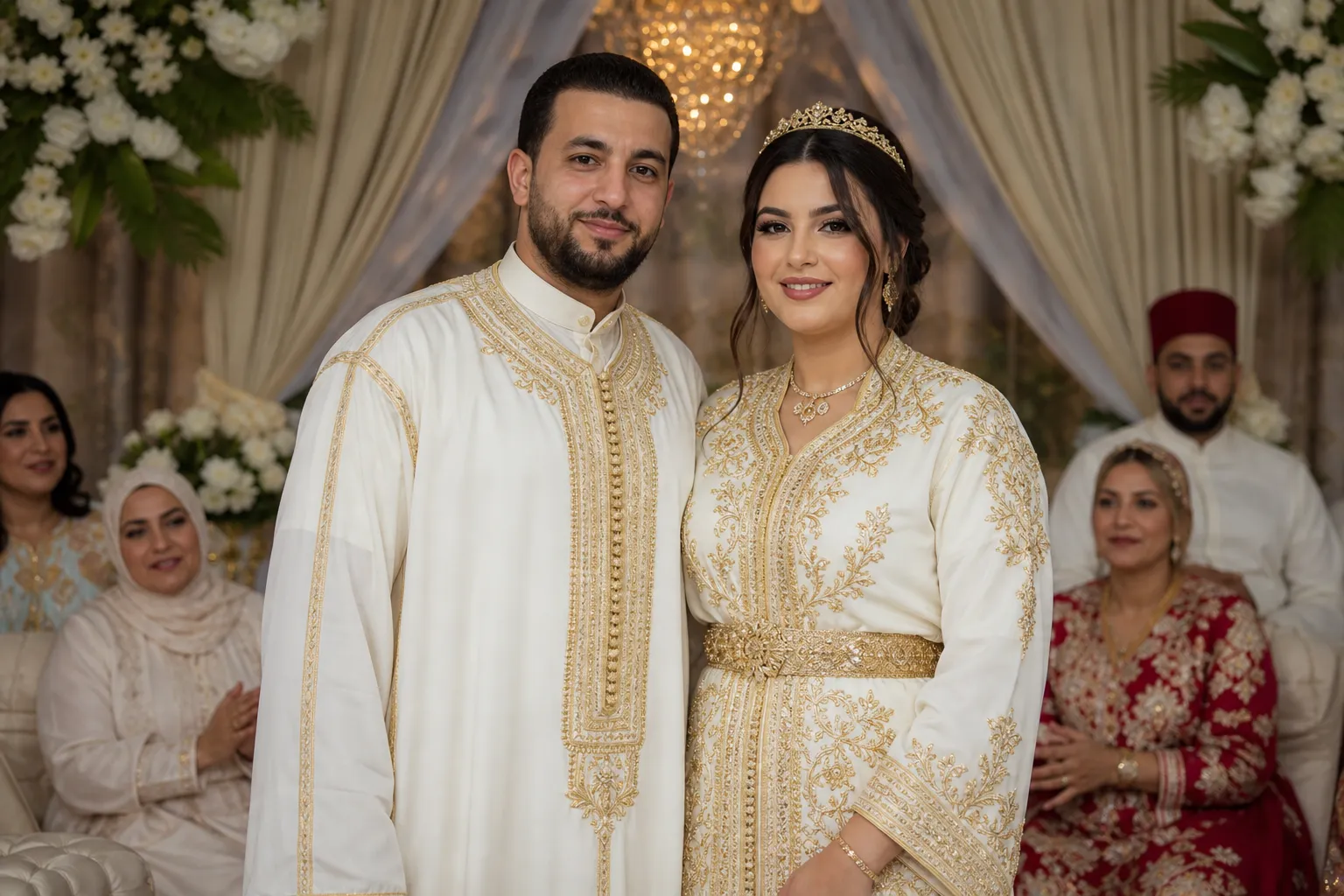
Finished-look portraits
- A full-length portrait of the completed look
- The couple together
- Requested family groups
- The relatives or attendants who helped with the change
- A wider image showing the room or reception setting, if desired
Details
- Embroidery, fabric texture, closures, belts, or layered pieces
- Jewelry, hair accessories, sleeves, neckline, or cuffs
- Shoes and other visible accessories
- The finished arrangement before the couple returns to guests
Transitions
If the family wants the transition documented, agree on its limits in advance. Possible images include the couple leaving the reception, relatives preparing the next look, a final styling adjustment, the return to guests, or guest reactions. The private dressing process should never be assumed to be photographable.
Assign the Handoffs
Clear roles reduce interruptions when a look is nearly ready. The following role map is a planning option, not a fixed arrangement.
- Couple: confirms the definite looks, preferred participants, privacy limits, highest-priority images, and whether the photographer may direct timing or poses.
- Family representative: answers event-time questions, gathers requested relatives, protects privacy preferences, and decides which optional image can be postponed.
- Negafa or styling coordinator: may coordinate presentation and transitions. Confirm who handles dressing, jewelry, accessories, final adjustments, and the styling cue.
- Photographer: receives the sequence, shot priorities, participant names or roles, permitted areas, privacy boundaries, access details, and preferred balance between candid and directed coverage.
- Venue contact: confirms change-room access, portrait locations, movement restrictions, lighting conditions, equipment limits, and the route back to the reception.
Choose one person to give the readiness cue. The negafa, family representative, or another agreed contact may fill that role, but several people should not give competing instructions.
The styling coordinator confirms that the look is finished, the family representative gathers the requested relatives, and the photographer takes the priority portraits before the couple returns to the reception.
Plan Timing Around the Change
Do not assign one universal duration to every caftan change. Preparation, accessories, room distance, portrait requests, and the number of participants can all alter the window.
Separate each change into four parts:
- Preparation: dressing, fastening, hair, makeup adjustments, and accessories
- Movement: travel between the change room, portrait area, and reception
- Photography: details, couple portraits, and requested groups
- Buffer: delays, room access, family gathering, and unexpected adjustments
The sequence sheet should show when the change begins, when the photographer arrives, which image happens first, and the latest acceptable return time. Place the highest-priority photographs first. If time is short, preserve the completed-look image, the couple's image, and the family group specifically requested for that look.
Coordinate the Change Room
Confirm that the room is available for the planned window, reachable by the photographer, large enough for the people actually needed, and workable for the styling team. Keep personal items and extra equipment clear of the movement path.
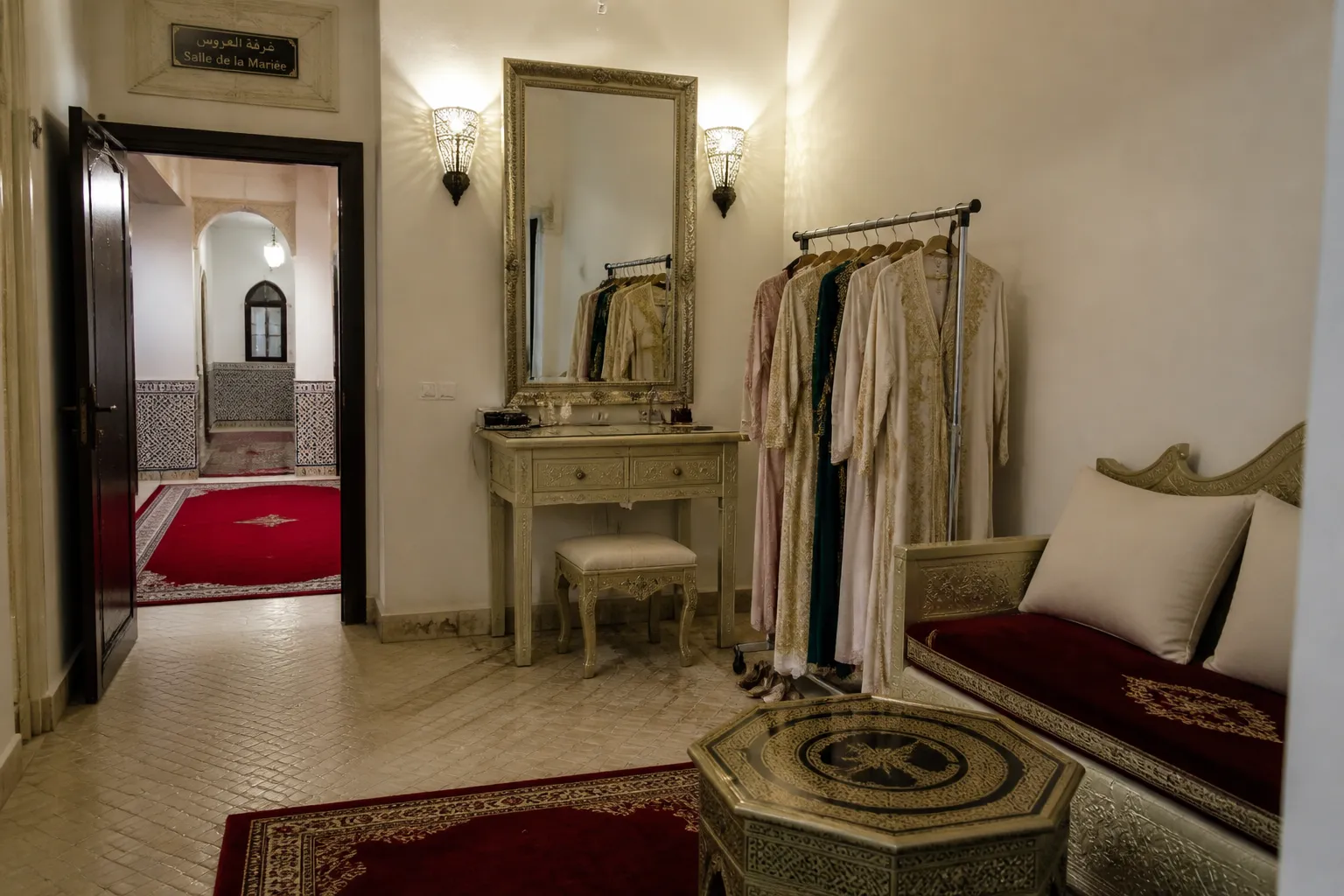
Ask whether flash or other equipment is permitted and whether relatives can wait nearby. A room does not need to be photographed because it is available; the couple may keep preparation private and use a separate location for finished portraits.
Set Privacy Boundaries
“Photos are allowed” is too broad for a busy change. Specify which rooms, people, stages, and images are included.
- Are preparation or dressing-assistance images permitted?
- May relatives enter the room during the change?
- Does the couple want private time before returning to guests?
- May guests take behind-the-scenes photographs?
- May children appear in images, and have their guardians and the family agreed?
- Should any image stay outside shared albums or social media?
- Who can ask the photographer to pause, step back, or leave?
Give the photographer these boundaries before the event. A specific instruction is easier to follow than an explanation made during a crowded transition.
Prepare the People List
Different looks may call for different groups. Use names or clear descriptions when several relatives have similar roles.
- The couple
- Parents, siblings, grandparents, or other requested relatives
- People who assisted with the change
- The negafa or styling team, if the couple wants them included
- Guests connected to a particular moment
- Children, where the family and guardians have agreed
A compact example might read: Look 1, couple and parents; Look 2, couple and siblings; Look 3, couple and change attendants; reception return, candid guest reactions subject to family preference. This is an organizational example, not a fixed Moroccan wedding practice.
Keep the Shot List Usable
Separate essential images from optional coverage so the photographer can adjust when the schedule changes.
Essential
- Each confirmed finished caftan look
- The couple together in each priority look
- Key clothing and jewelry details
- Requested family groups
- Change attendants, when appropriate
- A transition or return moment the couple specifically values
Optional
- Accessories before they are worn
- The change room before preparation begins
- A permitted styling detail in progress
- The couple moving back toward the reception
- Guests noticing the completed look
- A wider image of the setting
Discuss the preferred balance between candid and directed coverage. A brief pause can help show a completed styling adjustment or an important detail, while the rest of the transition may remain spontaneous.
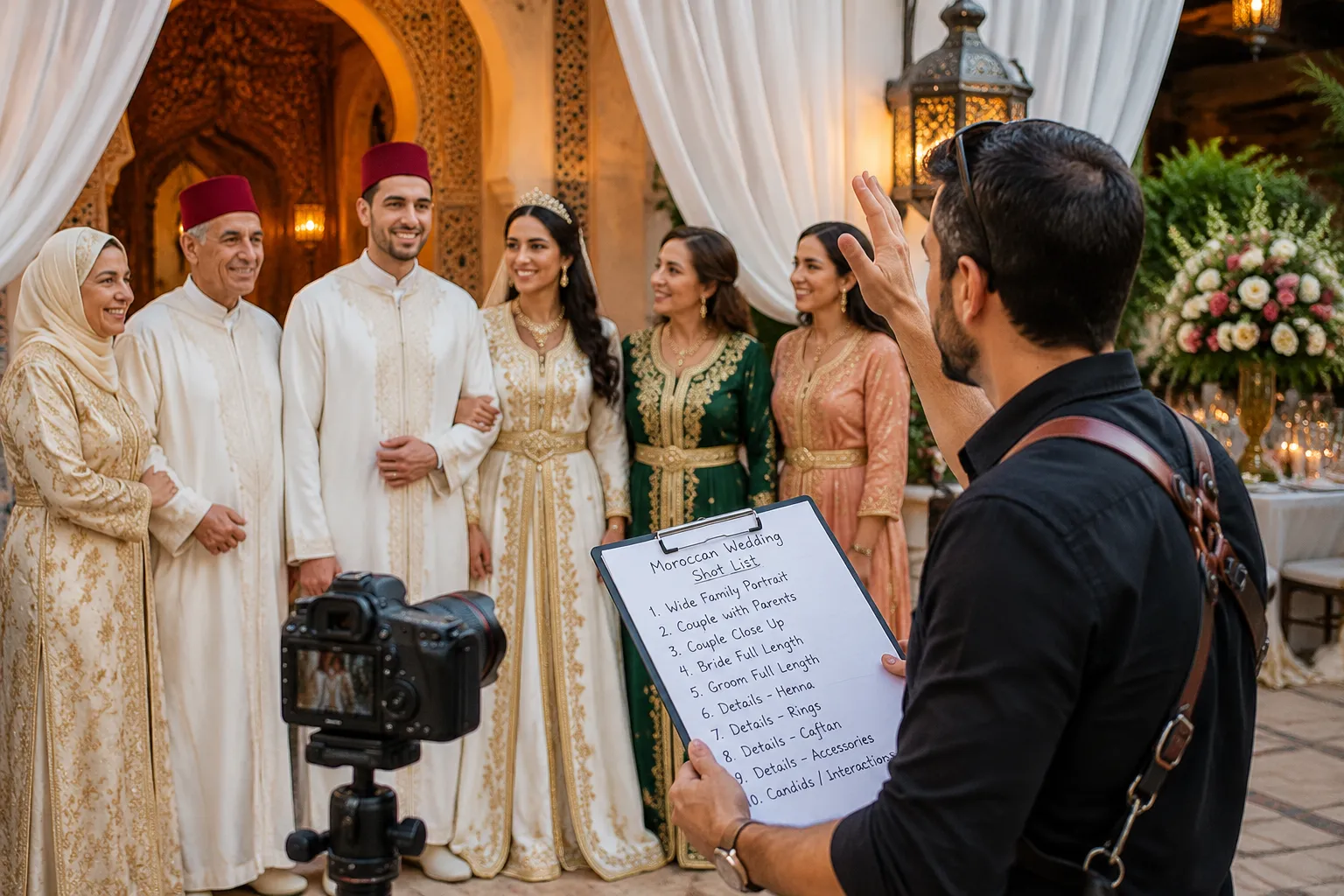
Confirm Coverage Before the Wedding
Ask the photographer:
- Which changes are included in the agreed coverage?
- Does coverage include preparation, transitions, finished portraits, or only the reception?
- How will the photographer receive the readiness cue?
- Which group photographs require advance notice?
- What happens if two planned moments overlap?
Ask the styling coordinator who assists with each look, who confirms completion, what space is needed, and which preparation stages may be photographed. Ask the venue contact whether the change room and nearby portrait area are available during the planned window, and whether access or equipment restrictions apply.
Keep the answers in the shared sequence sheet. Vendor coverage, family preferences, and venue access describe this celebration; they do not establish a universal caftan-change order.
Use a Fallback Plan
For each look, identify a first-choice portrait location, a backup location, the essential image, the group that can be photographed later, the person who may shorten the list, and the latest return time.
If the schedule tightens, keep the sequence simple:
- Finish styling and confirm that the look is ready.
- Photograph the essential couple image.
- Photograph the highest-priority family group.
- Capture one or two details if time allows.
- Return the couple to the reception.
Final Confirmation
Send the completed sheet to the people who will use it. Ask them to correct specific fields rather than approve a broad description:
Please confirm the planned looks and order, who assists with each change, where each change takes place, which preparation moments may be photographed, which family members join each portrait, and when the couple needs to return to the reception.
Before the celebration, check that you have:
- A family-confirmed caftan sequence and outfit descriptions
- A named person for each handoff
- Styling responsibilities and photographer coverage
- Change-room access and a backup portrait location
- A timing window with buffer
- A priority shot list and people list
- Privacy boundaries for preparation and children
- Instructions for candid and directed coverage
- A fallback plan for late changes or shortened coverage
- Final answers from the family representative, styling coordinator, photographer, and venue
Research on Moroccan wedding rituals and wedding photography supports planning around outfits, people, transitions, and family representation. It does not establish one required order, number of changes, participant list, or timing. Confirm the order where the wedding will actually happen.
Sources
- Research on Contemporary Moroccan Wedding Rituals and Multi-Outfit Ceremonies
- A Moroccan Wedding Ceremony between Tradition and Modernity: The Role of Women in the Preparations
- Gaze of a Wedding Photographer: Engaging with Clients as an Artist and a Photographer
- Promising Images of Love: A Qualitative-Ethnographic Study about the Mediatised Memories of Weddings
- A Common Motivation—a Specific Style for Each Culture: Towards a Comparison of Wedding Rituals in Morocco
- For Ever and Ever the Perfect Wedding Picture: Converging Religious and Secular Norms and Values in Wedding Photography
- La photographie enfantine au Maroc: Construction photographique des identités sexuées et idéologie du mariage