Moroccan Caftan Changes Without Slowing The Reception
Moroccan caftan changes can fit smoothly into a wedding reception when the couple, family, venue, photographer, DJ, and outfit team agree on the handoffs before guests arrive. Each change needs a clear purpose, a prepared private space, one readiness cue, and a defined return to the reception.
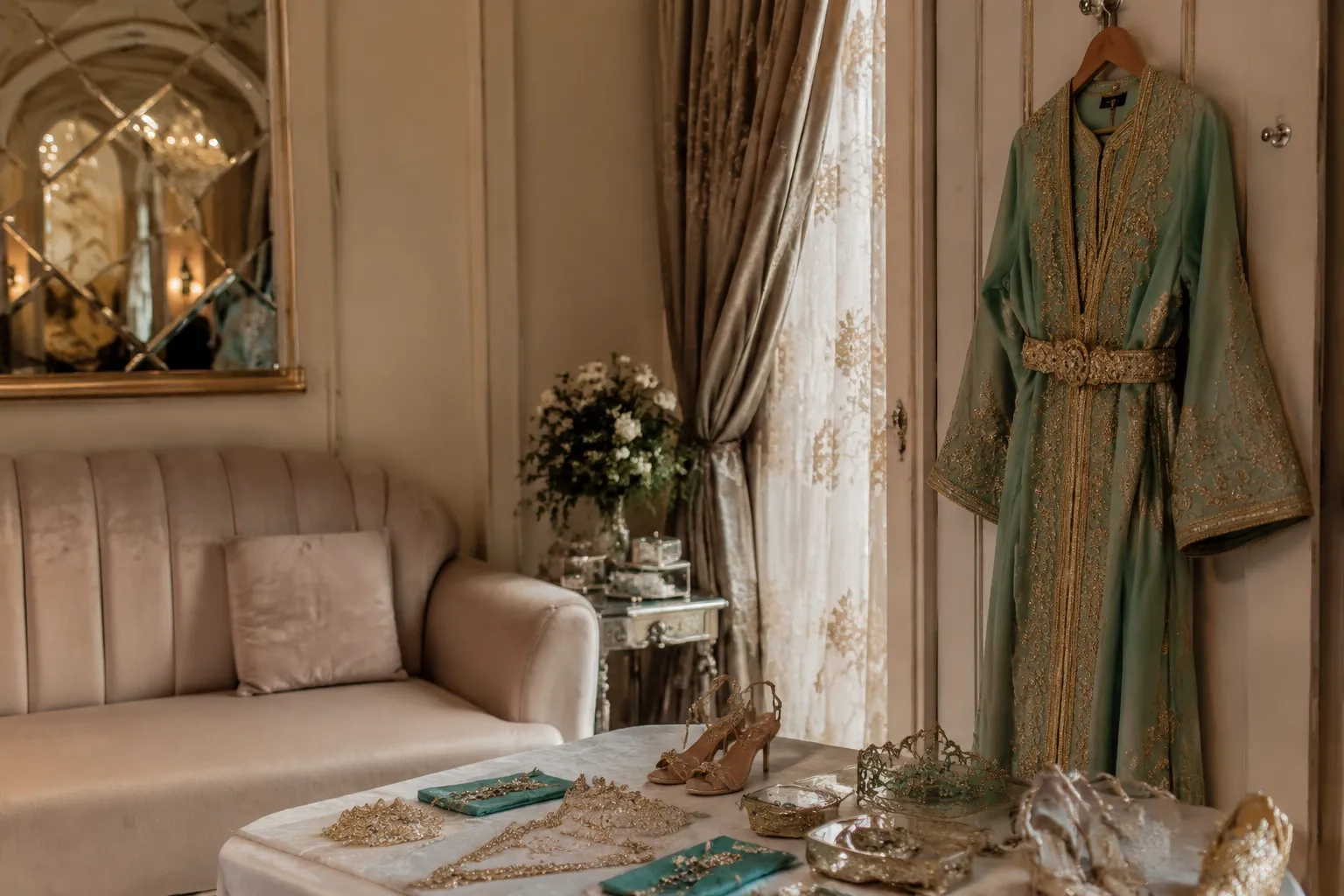
There is no single Moroccan caftan-change schedule for every wedding. The number of outfits, the role of the negafa, an amariya entrance, meal service, venue layout, family preferences, and the event format can all alter the reception planning sequence. Use the workflow below as one planning option, then confirm the details with the people responsible for the event.
A Workable Reception Sequence
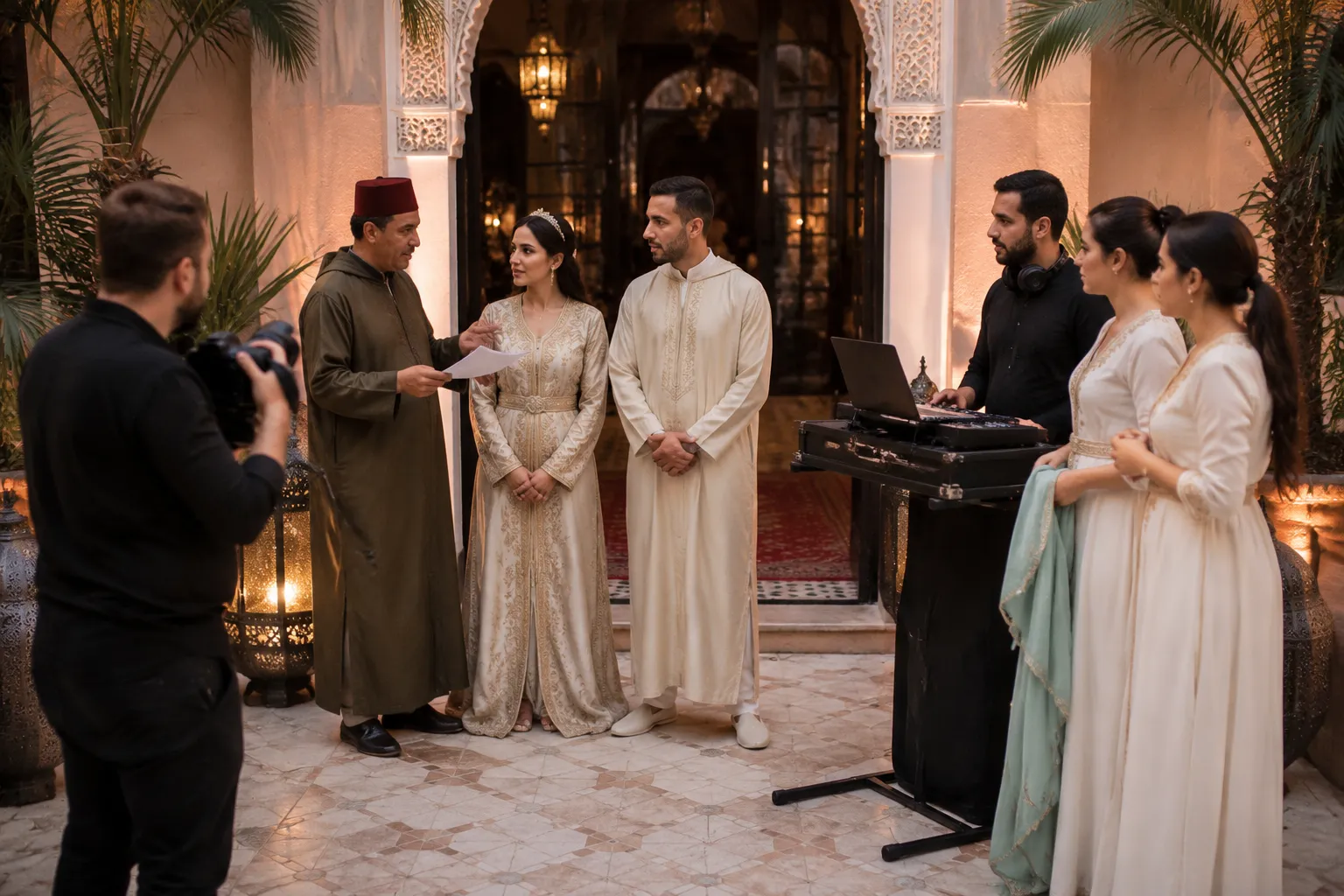
Guests should experience a prepared entrance, portrait session, dance, or transition while the outfit team manages the private work in the background. Use the same five-part sequence for each planned change:
- Set the next event point. Decide whether the new caftan leads into an entrance, family portraits, a meal transition, dancing, or another reception moment.
- Choose one cue. The DJ, coordinator, or designated family member should know when the change begins and who confirms readiness.
- Prepare the handoff. Keep the route private and clear. Place the next caftan, accessories, shoes, and fastening materials in the preparation space before the couple leaves.
- Keep the reception moving. Music, food service, tea service, conversation, or a family activity may continue according to the agreed program. Avoid an undefined pause.
- Confirm the return. The photographer and DJ should receive a clear message when the couple is ready for the next entrance or portrait sequence.
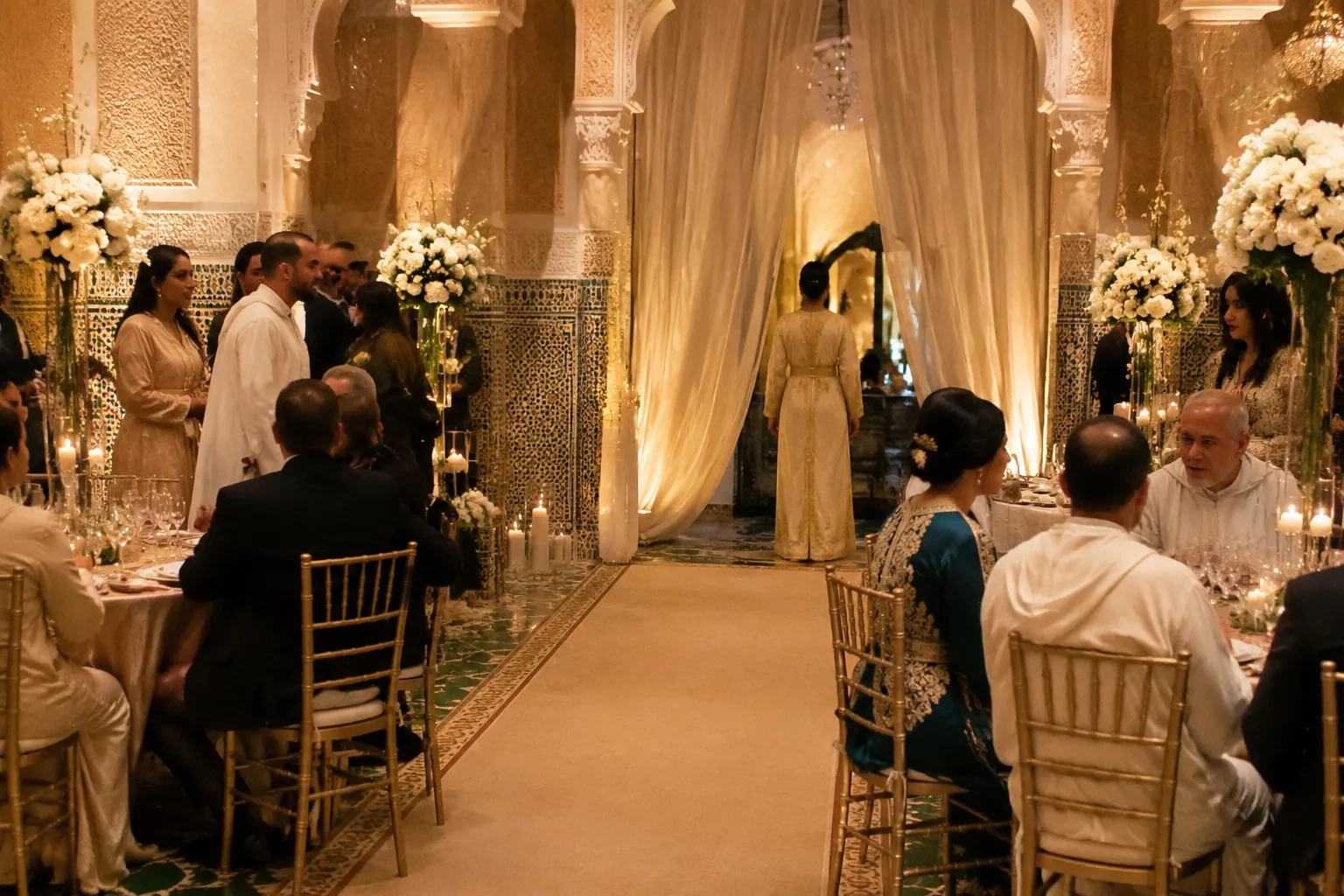
This is an event-management structure, not a claim about customary Moroccan practice. It gives each person a defined handoff while leaving room for family, regional, venue, and diaspora variation.
Give Each Change a Purpose
A caftan change takes less attention from the reception when everyone knows what follows it. Before setting the order, decide what the next outfit contributes to the evening.
- A formal entrance for the couple
- A new set of family portraits
- A transition between reception sections
- A family or regional clothing preference
- A moment connected with an amariya appearance
- A planned photography or video sequence
- A later outfit that suits dancing or extended social time
Some families may plan several clothing presentations, while others choose one or two changes. Research on Moroccan wedding rituals and dress describes variation across regions, families, urban and rural settings, and diaspora communities. It does not establish a universal outfit count or order.
The useful question is not how many changes a Moroccan wedding should have. Ask which changes matter to this couple and family, and where they can fit without competing with another important moment.
Assign the Handoffs
Unclear responsibility can create more delay than the clothing change itself. Name one person to own each handoff, even when several people assist.
The Couple
The couple confirms the outfit order, which changes are essential, and whether each change needs an entrance, portraits, or both. They should also decide who may enter the preparation space, which relatives belong at each public moment, and whether the reception continues during the change.
Make the cues precise. One signal should mean “leave for the change,” and another should mean “ready to return.”
The Family Representative
A family representative can gather relatives for portraits or an entrance without asking the couple to answer repeated questions while changing. Choose someone who understands the family’s preferences and can make quick decisions if the order shifts.
- Which relatives belong in each portrait group?
- Should a family activity or announcement happen before the entrance?
- Who needs to know if the order changes?
- Should guests remain seated, move closer, or continue socializing?
The Negafa or Outfit Team
If a negafa is involved, confirm her reception responsibilities with the couple and team. They may include wardrobe preparation, accessories, dressing assistance, styling, and readiness communication, but the arrangement can differ by vendor and event.
- Who prepares each outfit and carries its accessories?
- Who checks fastenings before the entrance?
- Who communicates readiness?
- Is a dedicated preparation room needed?
- How many assistants may enter that room?
Do not assume a vendor’s usual workflow matches the venue or family’s plan.
The Photographer and Videographer
Tell the image team the change order early enough to organize positions, equipment, and family groups. Clarify whether each change means a quick return to the reception or a separate portrait sequence.
- Which entrances require coverage?
- Which outfits need individual portraits?
- Do family portraits happen before or after the entrance?
- Where should the photographer wait?
- Who signals that the couple is ready?
- What happens if the return is delayed?
Available cultural research supports the importance of clothing presentation and photography in some Moroccan wedding settings, including documented regional examples involving multiple outfits. It does not establish a nationwide photography timetable.
The DJ or Music Lead
Give the DJ a short written running order and one contact person for changes. A clear instruction such as “hold the entrance until readiness is confirmed” is more useful than asking the DJ to watch for the couple.
- What cue starts the change?
- What cue starts the next entrance?
- Should music continue during the change?
- Should the DJ make an announcement?
- Who may cancel or reorder a music cue?
The Venue
The venue determines practical limits that cultural context cannot answer. Confirm access, privacy, service routes, stairs, elevators, furniture, noise, and the timing of food or tea service.
- Which room can be used for changing?
- Who may access it, and how will privacy be maintained?
- Which route avoids service areas?
- Can wardrobe staff enter before the reception?
- Can meal, tray, or tea service continue during the change?
- Are there venue timing restrictions affecting the running order?
Place Changes Around Event Flow
Place a change between meaningful reception sections when possible, rather than immediately before several obligations. A workable example may look like this:
- Guests arrive and settle.
- The couple completes an initial entrance or greeting.
- A social or service segment continues.
- The couple leaves on the agreed cue.
- The DJ maintains the selected atmosphere.
- The outfit team confirms readiness.
- The photographer takes position.
- The couple returns in the new caftan.
- The next reception section begins.
Adjust the order around a meal, family portraits, an amariya entrance, dancing, or another event format. If the couple must change, gather relatives, complete portraits, make an entrance, and begin dinner at the same point, a small delay can affect the wider reception.
Choose a Planning Option
Fewer Changes, Stronger Transitions
Fewer outfit changes may suit a venue with limited private space, a tightly scheduled reception, or a couple who wants more time with guests. Each change can receive a clear entrance and portrait window without dividing the event into too many pauses.
Changes Between Reception Sections
Each caftan change marks the move from one part of the evening to the next. This can work when the DJ, photographer, outfit team, and venue share the same running order. The main dependency is keeping each transition defined rather than open-ended.
Limited Public Interruption
The couple changes while guests continue with music, conversation, food, tea, or family activities. The return becomes the main public moment. This option depends on a suitable preparation area and a clear readiness signal, especially when relatives need to gather before the entrance.
Keep Guests Oriented
Guests do not need every backstage detail, but they should not be left with a long unexplained pause. Use a short announcement only when it helps them understand the transition; otherwise, let music and ongoing service carry the interval.
Before the event, decide whether guests remain seated or move, whether food and drinks continue, whether a family activity fills the transition, and who explains a delay if the original order changes. Do not promise an exact change duration unless the responsible team has agreed to that timing for the specific outfit, venue, and schedule.
Prepare a Compact Change Brief
Give every responsible person the same written brief. It can fit on one page and should include:
- Outfit order and purpose of each change
- Planned event point and cue to leave
- Preparation location and access list
- Person responsible for the readiness signal
- Photographer position and DJ instruction
- Family portrait group
- Meal or service detail affected
- Backup decision if the couple is delayed
A backup may move portraits after the entrance, extend music without an announcement, or remove a less important change. Decide this before the reception so the team does not negotiate in front of guests.
Questions To Confirm
With the Couple and Family
- Which caftan changes are meaningful to you?
- Does each change need an entrance, portraits, or both?
- Who must be present for each public moment?
- Who gives the final readiness signal?
- Should guests receive an announcement during the change?
With the Venue
- Where can the couple change privately?
- Who may access that room?
- What route will the couple and outfit team use?
- Can meal, tea, and other service continue?
- Are there timing restrictions affecting the order?
With the Photographer and DJ
- Who receives the change cue?
- How much notice does the photographer need to reposition?
- What music continues during the change?
- What happens if the couple is not ready?
- Who can approve a change in order?
With the Outfit Team
- Are garments and accessories prepared in order?
- Which items need special handling?
- Who assists with each change?
- How will readiness be communicated?
- What is the fallback if one outfit cannot be used?
The Planning Boundary
Moroccan caftan changes should be arranged around the couple’s family preferences and the actual reception conditions, rather than an assumed universal tradition. Cultural materials describe variation in Moroccan wedding rituals, clothing practices, photography, and diaspora settings, but they do not establish one required order or standard timing model.
The practical plan is therefore simple: agree on one cue, name each handoff, prepare the private space, and decide what changes if the couple is delayed. Confirm that sequence with the family, venue, photographer, DJ, and outfit team before the event.
Sources
- A Moroccan wedding ceremony between tradition and modernity: the role of women in the preparations.
- Making Money, Marking Identities: On the Economic, Social and Cultural Functions of Moroccan Weddings in Brussels
- A Common Motivation—a Specific Style for Each Culture: Towards a Comparison of Wedding Rituals in Morocco
- Dynamique des rituels familiaux et le rôle de plus en plus prépondérant de la vidéo photographie
- Reformulating tradition and modernity: Moroccan migrant women and the transnational division of ritual space
- The Changes of Meaning Over Life Stages: Caftans As Expression of Moroccan Women’s Identities
- Defining Moroccanness: the aesthetics and politics of contemporary Moroccan fashion design