Moroccan Wedding Caftan Changes On A Budget
Affordable Moroccan wedding caftan changes begin with reducing unnecessary outfit changes, then coordinating the garments, people, and timing around the looks you keep.
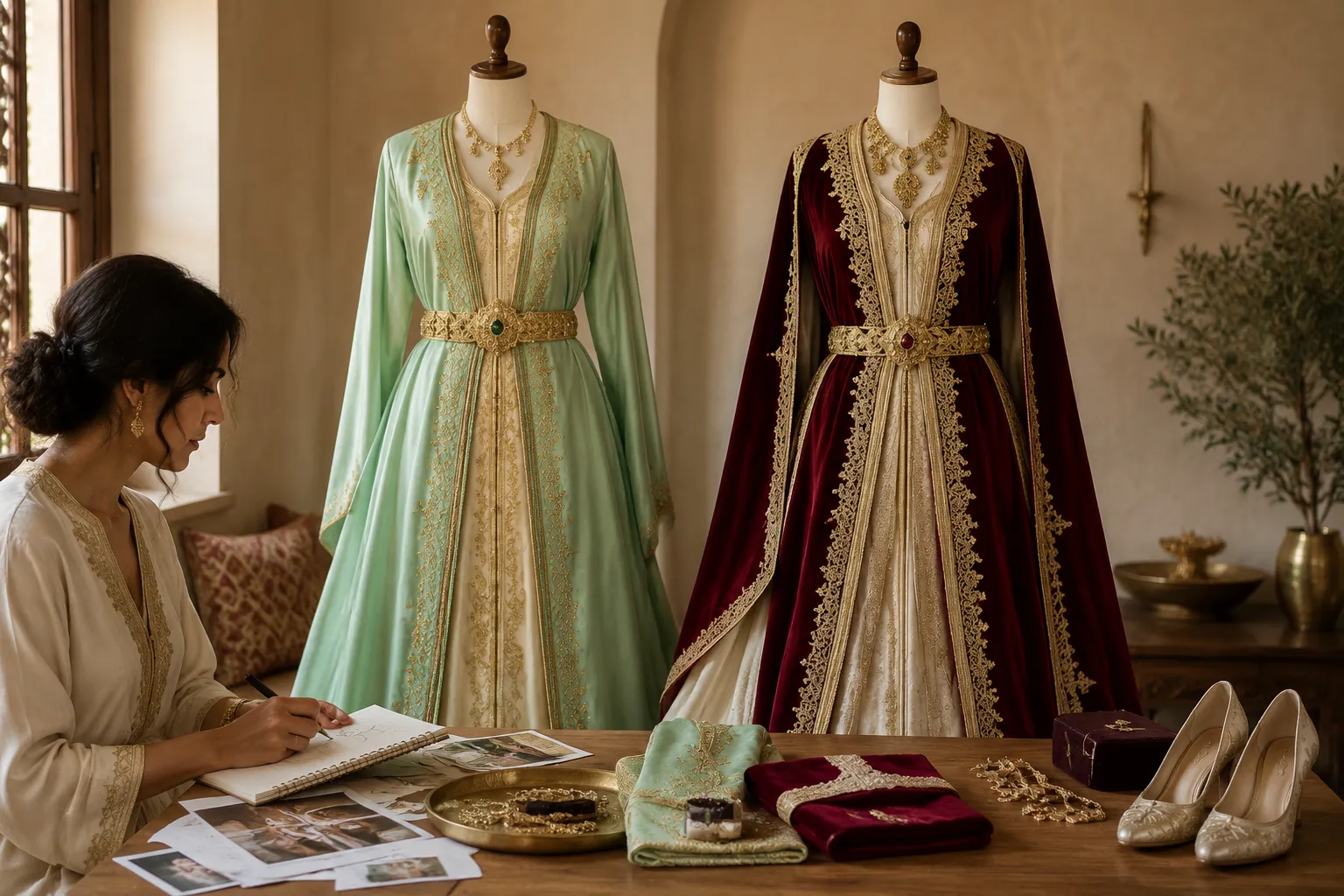
There is no universal number or order of caftan changes for Moroccan weddings. The sequence may differ by family, region, generation, diaspora setting, wedding format, venue, and the person coordinating the bride’s dressing. Start with the celebration you are actually preparing, rather than a fixed idea of how many outfits a Moroccan wedding should include.
Start With The Number Of Looks
List the moments when a change may genuinely add value:
- Henna night
- The main reception
- A family entrance or presentation
- Dinner and photographs
- A later evening transition
Then ask whether each moment needs a complete caftan change. A different belt, jewelry arrangement, shawl, hairstyle, or outer layer may create a visible transition without replacing the entire garment.
A practical starting plan is one primary caftan or takchita, one alternative look if the schedule supports it, and accessory changes where they are workable. A takchita may include layered garments, a belt, and detailed finishing, but terminology and styling arrangements vary. Confirm how the family and stylist use these terms before finalizing the plan.
The aim is not to make the wardrobe as small as possible. It is to avoid paying for a change that guests will barely see, leaves too little time for photographs, or creates a difficult handoff between the dressing area and reception.
Compare Four Budget Routes
Each route changes the work required from the bride, family, tailor, rental provider, stylist, or negafa. Compare the full arrangement, not only the garment price.
| Route | Where It May Help | Details To Confirm |
|---|---|---|
| Reuse and restyle | Keeps one garment central while changing its visual emphasis | Belt, jewelry, sleeves, outer layer, steaming, and dressing time |
| Rental | Provides access to additional looks without buying each garment | Deposit, cleaning, fitting, damage terms, return time, and transport |
| Borrowing | May reduce clothing costs when a family garment is available | Fit, permission, alterations, care, and transport responsibility |
| Tailoring or alteration | Allows one garment to be adjusted for a planned change | Fabric, embroidery, sleeves, hem, waist, deadline, and extra charges |
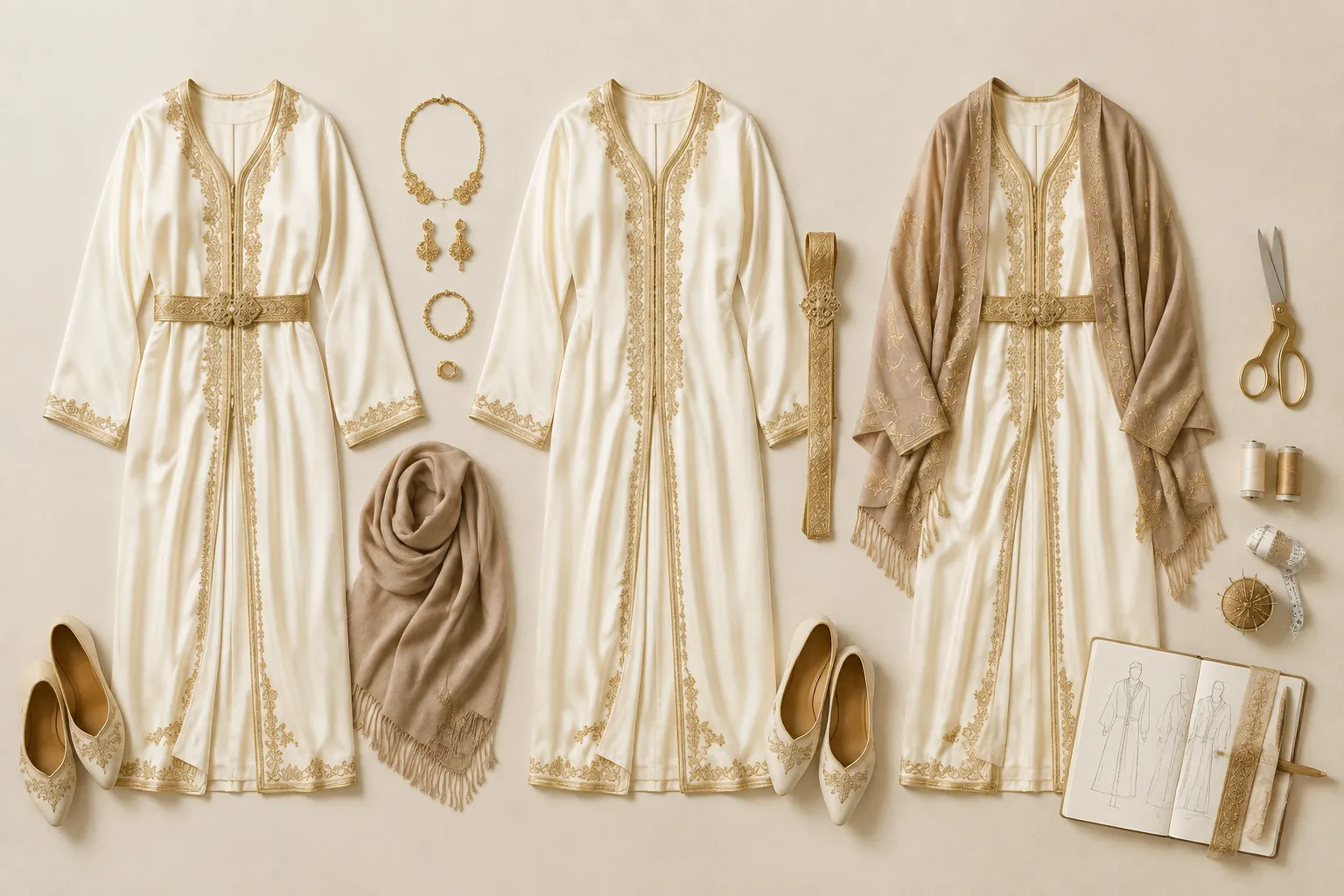
These routes are planning options, not current price evidence or universal service arrangements. Rental terms, tailoring practices, and wedding-service coordination differ by provider and location.
Reuse The Expensive Elements
Before commissioning another complete look, identify which parts already create the strongest visual change. A belt, embroidered layer, jewelry set, sleeve treatment, or contrasting outer garment may alter the appearance of the same base caftan.
Ask the tailor or stylist to inspect the actual garment before promising an adjustment. Research on contemporary caftan design describes differences in length, width, sleeve shape, waist definition, and silhouette, but it does not establish that a particular garment can be changed successfully, affordably, or within your schedule.
Use a fitting conversation that covers:
- Current measurements and intended fit
- Hem and sleeve length
- Waist or chest adjustments
- Placement of embroidery and closures
- Whether the fabric can support the proposed change
- Whether the belt or layered piece remains compatible
- How the garment will be pressed and transported afterward
These are questions for the person handling the garment. They are not a promise about the final result.
Build The Change Sequence Around Handoffs
A caftan change is a small production sequence. Someone must carry the garment, prepare the dressing space, manage jewelry, check the fit, protect the fabric, and tell the photographer when the bride is ready.
- The bride finishes the previous photographs or ceremony moment.
- The coordinator announces the transition.
- A designated person carries the next garment and accessories.
- The bride changes in the agreed private space.
- The stylist, negafa, family member, or another helper completes the dressing.
- The garment, belt, sleeves, and jewelry receive a final check.
- The photographer is notified.
- The bride returns for the next entrance, portrait group, or reception moment.
- The previous look is protected, labeled, and moved to its agreed storage point.
The people involved may differ. In some families, relatives handle parts of preparation. In other arrangements, a negafa or stylist coordinates several styling details. Research on Moroccan weddings and Moroccan diaspora celebrations describes variation in preparation roles, service arrangements, and ritual spaces, so confirm responsibilities directly rather than assigning them from a general description.
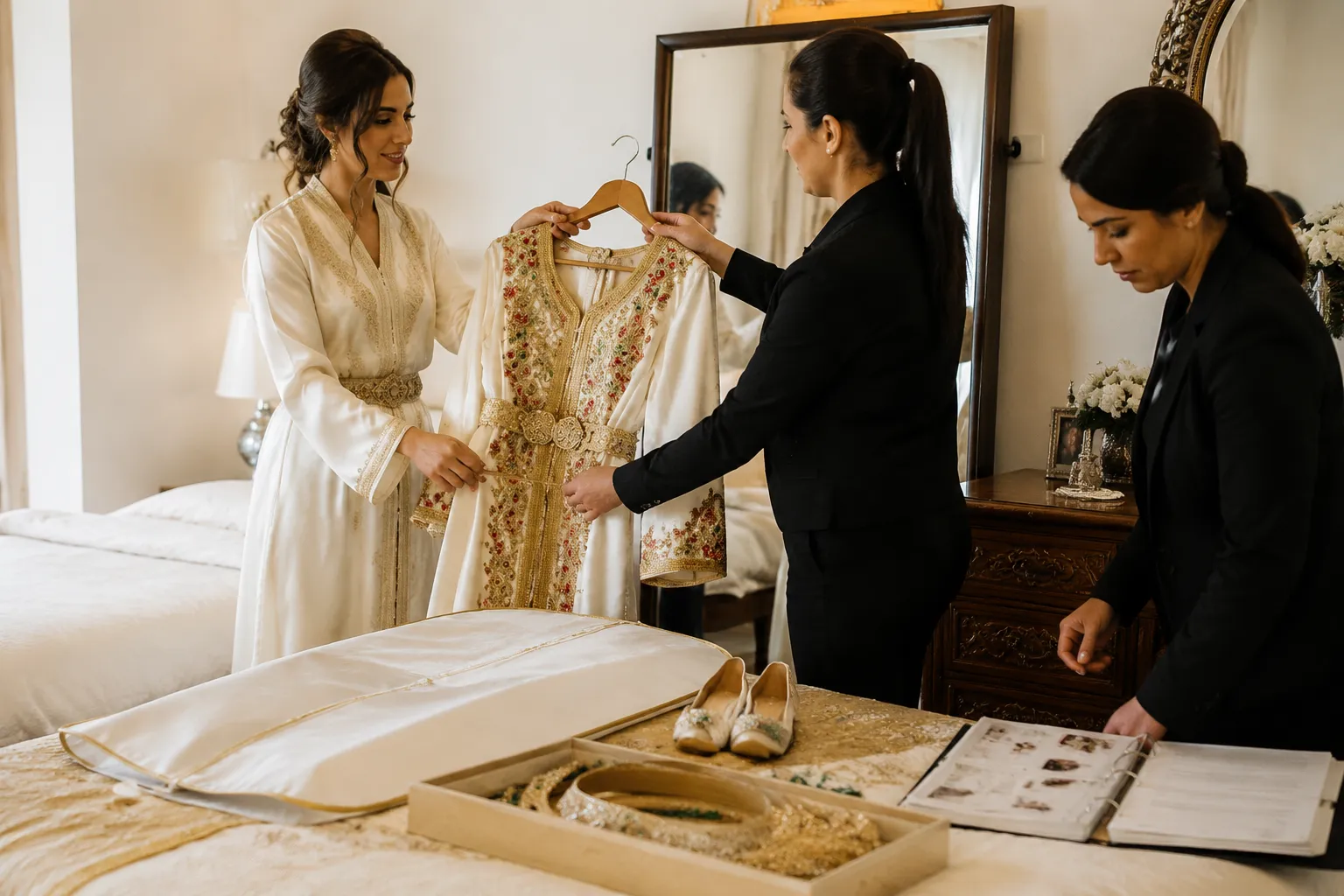
Budget The Time, Not Only The Clothes
A low-cost second look can become expensive in practice if it causes missed photographs, rushed dressing, extra transport, or venue complications.
For every planned change, confirm:
- Where the change will happen
- Who has access to the room
- How long the space is available
- Who brings the garment
- Who brings the belt and jewelry
- Whether a mirror, chair, hooks, or table is available
- Where the previous garment will be stored
- Whether the photographer and music coordinator need a cue
- When the next family group must be ready
- Whether the venue allows garment bags or dressing supplies backstage
Do not assume that the reception schedule includes time for dressing. Ask the venue and the person coordinating the program for a realistic transition window. Available research does not verify a standard Moroccan wedding change schedule.
Choose A Simple Look System
A budget-friendly plan becomes easier when each look has a defined job.
Look One: Main Entrance
Choose the garment that carries the most family or personal importance for the principal entrance and formal portraits. Protect enough time for the people who need to see or photograph this look.
Look Two: Visible Variation
Use a second garment only if it adds a clear difference in color, silhouette, layering, or styling. A rental, borrowed piece, or existing family garment may be considered, but its fit and care requirements still need confirmation.
Accessory Transition
Reserve accessory changes for moments when a full change would disrupt the event. This might involve a different belt, jewelry arrangement, shawl, outer layer, or hair treatment, depending on the styling plan and family preference.
This structure is an example, not a prescribed Moroccan wedding format. Regional and family clothing choices may carry meanings that are not visible from a general wardrobe plan. Research on wedding dress and ritual practice in Morocco also documents variation in regional clothing, colors, preparation, and ceremony structure.
Confirm Rental And Tailoring Terms
Current prices, deposits, lead times, cleaning arrangements, late-return terms, and alteration policies vary by provider and location. Ask for the exact terms before paying.
For A Rental
- Total price and deposit
- Fitting appointment and fitting fee
- Included belt, jewelry, sleeves, or layered pieces
- Cleaning responsibilities
- Stain or damage assessment
- Pickup and return times
- Late-return charges
- Transport responsibility
- Whether another person may collect or return the garment
For Tailoring
- Measurement date
- First and final fitting dates
- Alteration scope
- Materials included
- Pressing or finishing arrangements
- What happens if the proposed alteration is not feasible
- Extra charges for urgent work
- Who approves the final fit
For Borrowing
- Whether alterations are permitted
- Who pays for cleaning
- How the garment will be carried
- Who accepts responsibility during the wedding
- Where it will be stored after the change
A written message is useful because several people may be involved, and a verbal assumption can disappear during a busy wedding day.
Use One Shared Change Sheet
Keep the plan on one page or in one shared note. Include:
- Look name
- Garment owner
- Fitting contact
- Accessories
- Dressing helper
- Change location
- Estimated transition window
- Photographer cue
- Transport person
- Storage location
- Payment or deposit status
- Final confirmation date
Give the same information to the bride, family coordinator, stylist or negafa, photographer, venue contact, and anyone transporting the garments. The list should show who acts next, not merely what each outfit looks like.
Questions To Ask Before Booking
- Can this garment be adjusted in the specific area I need?
- Will the alteration affect the embroidery, lining, belt, sleeves, or layered pieces?
- Is the quoted amount for the garment only, or does it include fitting and finishing?
- How many fittings are expected?
- Who keeps the garment between the fitting and the wedding?
- What happens if the wedding schedule changes?
- Who will dress the bride during each transition?
- Is there a private, accessible dressing space at the venue?
- Can the photographer allow time for the change and a short fit check?
- What are the deposit, cleaning, transport, and return conditions?
- Which look does the family consider most important?
- Are any regional or family-specific colors, garments, or styling details expected?
The last two questions belong near the beginning of the process. A cheaper plan can still create tension if it removes a look that a close family member considers central to the celebration.
A Practical Budget Decision
- Keep the main caftan if it has family importance or fits the schedule best.
- Reuse accessories when they create enough visible difference.
- Consider rental when you need variety without commissioning several garments.
- Consider borrowing when the garment’s fit, care, and permission are clear.
- Alter only after a tailor has inspected the actual fabric, construction, embroidery, and intended change.
- Remove a look when its timing, transport, or dressing requirements outweigh its value.
A Moroccan wedding caftan change plan works through coordination as much as clothing selection. Confirm the family preference, assign every handoff, check the provider’s current terms, and leave enough time for the bride to change without rushing the next part of the celebration.
Sources
- Contemporary fashion and its impact on the shape of the sleeves in the traditional Moroccan caftan
- Making Money, Marking Identities: On the Economic, Social and Cultural Functions of Moroccan Weddings in Brussels
- Flairer l’occasion : une trajectoire transnationale tissée entre les plis du caftan marocain
- Defining Moroccanness: the aesthetics and politics of contemporary Moroccan fashion design
- A Common Motivation—a Specific Style for Each Culture: Towards a Comparison of Wedding Rituals in Morocco
- A Moroccan wedding ceremony between tradition and modernity : the role of women in the preparations.
- Les couleurs de la mariée dans le Sud-Est marocain