Moroccan Wedding Outfit Change Timeline By Hour
Place each outfit change around the wedding moments that cannot move. A flexible Moroccan wedding outfit change timeline may begin with preparation and portraits, then move through guest arrival, entrances, planned changes, dinner, and a closing appearance.
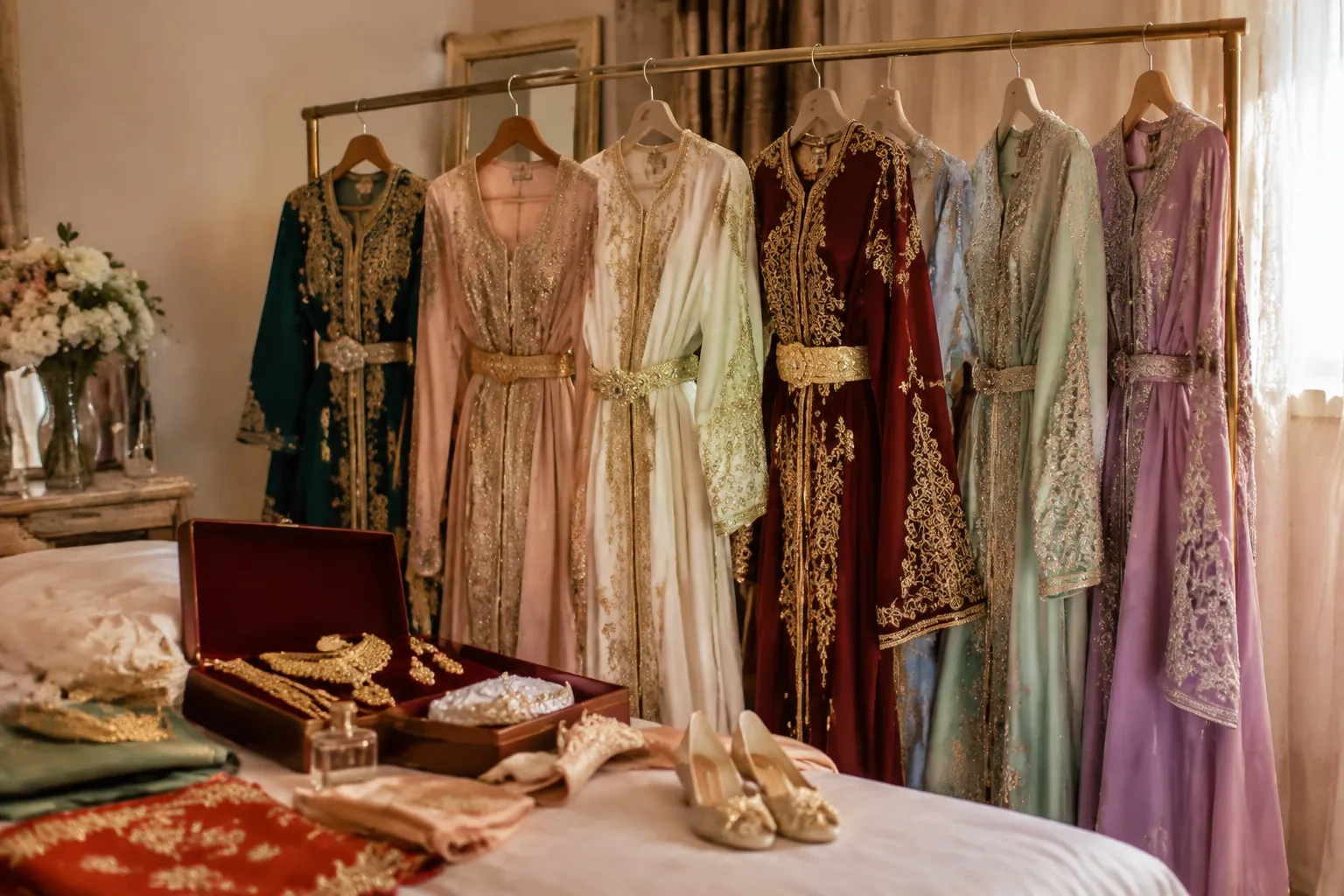
The schedule below is a working example, not a universal Moroccan sequence. Outfit order, the number of changes, family roles, and event timing may vary by region, family, religious setting, venue, and whether the celebration takes place across several events.
| Time | Planned focus | Main handoff |
|---|---|---|
| 2:00 p.m. | Final fitting, garment check, and accessories | Couple, dresser or stylist, trusted family member |
| 3:00 p.m. | Hair, makeup, and first outfit preparation | Beauty and dressing teams |
| 4:00 p.m. | First reveal, portraits, and room details | Couple, photographer, family |
| 5:30 p.m. | Guest arrival or reception opening | Venue team and family host |
| 7:00 p.m. | First public entrance or seated appearance | Negafa, musicians, venue team |
| 8:30 p.m. | First planned change and portrait reset | Dresser, photographer, family coordinator |
| 10:00 p.m. | Second change around dinner or entertainment | Dresser, catering team, event coordinator |
| 11:30 p.m. | Final outfit, closing portraits, or farewell | Couple, photographer, ceremony team |
How To Use The Schedule
Start with fixed moments, then place outfit changes around them. These moments may include a henna night, family entrance, amariya procession, tea service, dinner, speeches, dancing, or formal portraits. The exact combination belongs to the couple and family.
For every outfit, record four details:
- When the outfit needs to be visible to guests
- Where the change will happen
- Who prepares and carries the next garment
- What photograph, entrance, or family moment follows
This turns a clothing list into a sequence of handoffs. A caftan or takchita may appear in the celebration, but the order and number of outfits can differ considerably. Some families plan several appearances, while others choose fewer changes to preserve time with guests, food, music, and relatives.
Example Moroccan Wedding Outfit Schedule
2:00 p.m. — Check Every Garment
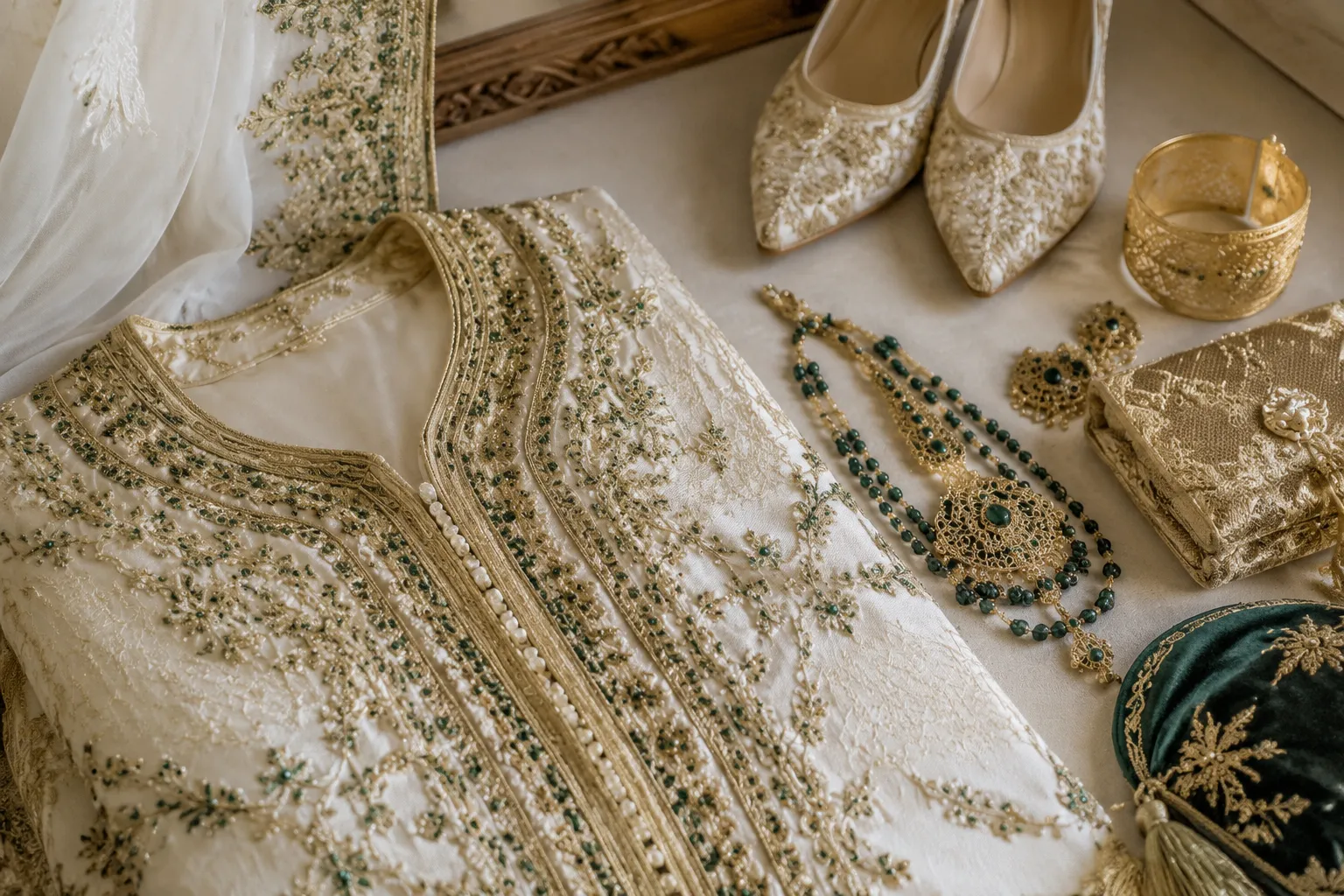
Use the first block for inspection and preparation. Lay out each outfit with its accessories, shoes, jewelry, underlayers, fastenings, and pieces needed for an entrance.
The couple, dresser or stylist, and one trusted family representative can check:
- Which garment belongs to each appearance
- Whether all accessories are present
- Which items need steaming or careful handling
- Whether the next outfit is easy to reach
- Which garment should remain protected until later
- Whether the photographer needs detail photographs before guests arrive
Use a written outfit list with a clear label for every garment. Memory becomes unreliable once several people, rooms, and timing cues enter the process.
3:00 p.m. — Prepare Hair, Makeup, And The First Outfit
The first change may involve hair, makeup, jewelry, footwear, and head coverings as well as the garment itself. Confirm whether the first outfit is for private preparation photographs, immediate family portraits, a formal entrance, or a seated reception appearance.
If it will be used for the opening entrance, the dressing team needs to finish before guests and musicians are ready. If it is reserved for portraits, the couple may have more flexibility.
4:00 p.m. — Photograph The First Outfit
Give the photographer a quiet window for the first outfit before the reception becomes crowded. Priority images may include garment details, the couple together, close family groups, and room or entrance details.
Tell the photographer if the outfit will change soon. Complete images that are difficult to recreate later, such as quiet family groupings or detailed photographs of jewelry and embroidery.
5:30 p.m. — Protect The Guest-Arrival Transition
When guests begin arriving, keep garments, accessories, packaging, and personal items together in a controlled space. Confirm who communicates with the venue team, photographer, musicians, family host, dresser, and the person responsible for the next outfit.
A single coordinator can pass confirmed decisions between these groups. The couple should not have to answer every timing question while getting ready.
7:00 p.m. — Plan The First Public Appearance
The first public appearance may be an entrance, welcome, or seated presentation. In some families, the negafa helps coordinate clothing, presentation, and transitions. In other celebrations, relatives or separate event staff may hold those responsibilities.
Confirm the actual role before the event. Before the entrance, identify the gathering point, route, starting cue, musicians’ notice, couple’s position, nearby family members, and the photographer’s clear path.
8:30 p.m. — Complete The First Planned Change
Treat the first major change as a scheduled handoff. The dresser or stylist prepares the next outfit, the coordinator confirms that the couple is ready, and the photographer receives a return cue.
- The couple leaves the public area.
- The coordinator informs the photographer and venue team.
- The next garment and accessories move to the dressing space.
- The dresser or stylist completes the change.
- The photographer receives a readiness cue.
- The couple returns for portraits or the next program moment.
No supplied source establishes a standard Moroccan changeover duration. Allow time for the actual garment construction, accessories, dressing room, travel between rooms, and people involved.
10:00 p.m. — Place The Next Change Around The Meal
A second change may fit before dinner, after dinner, or between entertainment segments. The right position depends on family greetings, table visits, speeches, music, and any public entrance.
Ask the venue and family coordinator which moments create fixed windows. Avoid placing a change during an activity that cannot be repeated. If the outfit is intended for an important photograph, confirm the photographer’s position before the couple returns.
11:30 p.m. — Reserve The Final Outfit For A Clear Moment
The final outfit may support closing portraits, a final appearance, continued dancing, or departure. It does not need to be the most elaborate outfit unless that is the couple’s preference.
Confirm whether the couple must remain available afterward. A late change should not remove them from a planned farewell sequence or the last family photographs.
Who Owns Each Handoff?
Create a role map before the wedding. One person may hold several responsibilities, but each handoff needs a named owner.
| Responsibility | Person to confirm |
|---|---|
| Keep the master outfit order | Couple or designated coordinator |
| Prepare garments and accessories | Dresser, stylist, negafa, or family member |
| Control access to the dressing space | Venue contact or trusted relative |
| Give the readiness cue | Coordinator |
| Plan portraits around each outfit | Photographer and couple |
| Coordinate entrances and music | Ceremony or music lead |
| Direct family groups | Family representative |
| Confirm venue timing and room access | Venue contact |
“The family will handle it” is too broad for a schedule with several changes. Write down who carries each garment, who opens the dressing room, who calls the photographer, and who releases the couple for the next appearance.
Preparation Time And Buffer
Use adjustable blocks rather than copying a fixed number of minutes. Ask the dresser or stylist how long the actual garments and accessories require, then add room for movement, photography, and interruptions.
- Printed or shared outfit order
- Garment labels
- Matching accessories grouped together
- Secure place for jewelry
- Steamer or agreed garment-care arrangement
- Comfortable footwear for movement between rooms
- Water and a small personal kit
- Dressing-room key or access contact
- Coordinator and venue contact list
- Photography cue for each completed change
Include time to remove the previous outfit carefully. Fastenings, jewelry, headpieces, and layered garments can make a transition longer than the visible change suggests.
Photography Around Outfit Changes
Plan photography around each change. Decide whether the priority is garment detail, couple portraits, family portraits, entrance images, or reception coverage.
Give the photographer the expected reveal time, dressing-room location, required family groups, entrance details, procession information, moments that cannot be repeated, and the person providing the readiness cue. The photographer should also know when the couple is unavailable, so the schedule does not promise portraits during a dressing block.
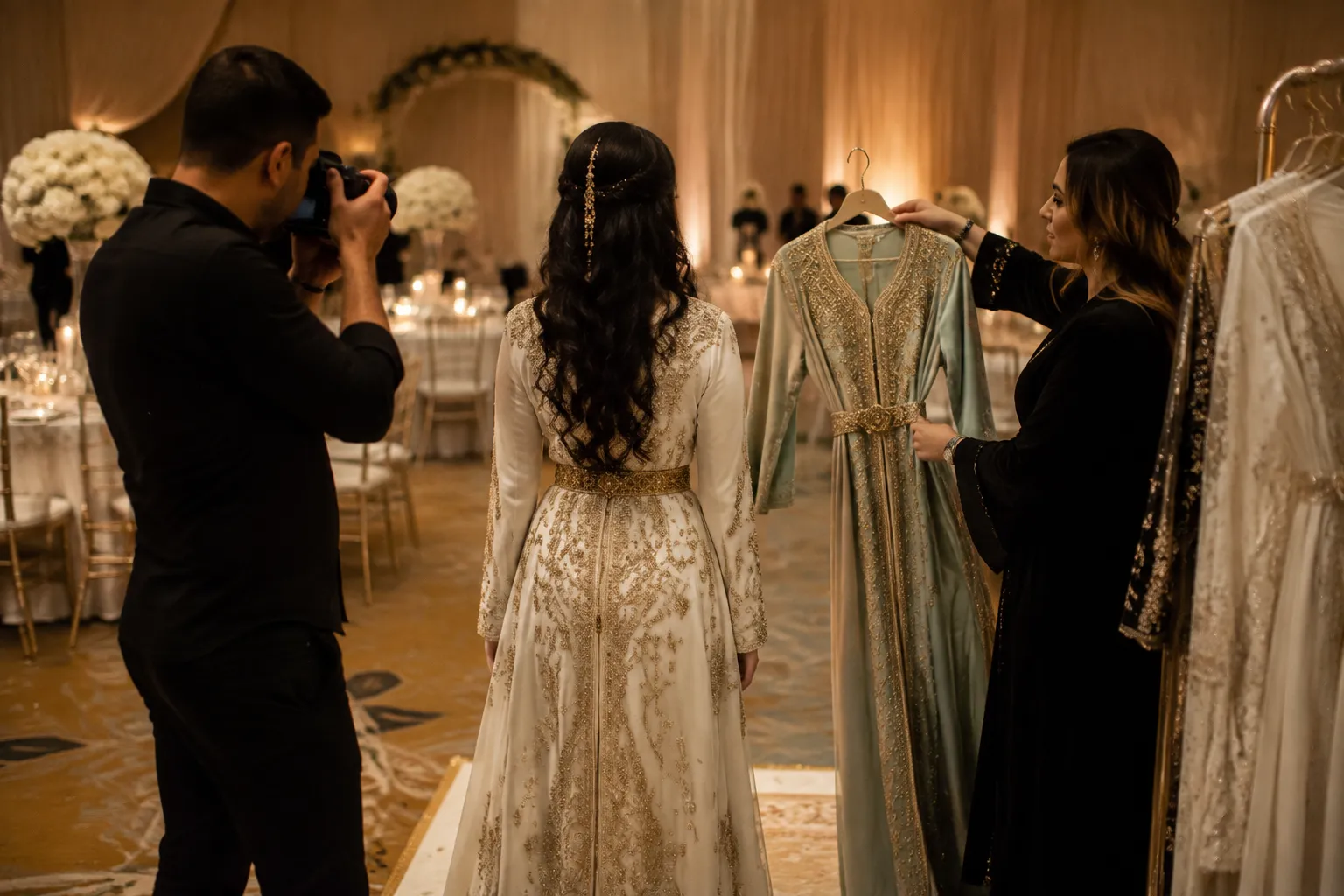
General wedding-photography research can offer a useful way to think about moments before, during, and after an event. It does not establish a Moroccan wedding workflow, so the actual order still belongs in the local event brief.
When The Timeline Should Change
Adjust the plan when the celebration includes:
- A separate henna night
- Multiple venues
- Daytime and evening programs
- A private family gathering before the reception
- A family or religious ceremony with its own timing
- A public entrance requiring musicians or procession participants
- Limited dressing-room access
- Travel between preparation and reception spaces
- A large number of family portraits
- A smaller event where repeated changes would reduce time with guests
A henna night should not automatically be merged into the wedding-day outfit schedule. Documented clothing traditions among northern Moroccan Sephardi Jewish communities belong to a specific community context, not to a universal Moroccan wedding sequence.
Regional evidence also shows why one national order is unreliable. Research on the Greater Agadir area describes a seven-outfit ritual in a particular regional and urban setting. That example shows how several changes may form part of one wedding format; it does not establish seven outfits as a standard elsewhere.
Questions To Confirm Before The Event
Send one clear planning message to the couple, family representative, venue, dresser or stylist, photographer, musicians, and ceremony team:
Which outfits will be worn, in what planned order, and at which event moments? Who carries each garment, who controls the dressing space, who gives the readiness cue, how much time does each change require, and which portraits or entrances must happen before the next change?
Also confirm:
- Whether the schedule covers one day or several events
- Whether the first outfit is private or public
- Whether the negafa is involved in outfit coordination
- Whether the venue provides a private changing space
- Whether the couple can leave the reception area during each change
- Whether family portraits follow every outfit
- Whether the photographer needs a separate detail window
- Whether the final outfit connects to a closing entrance or departure
- Which family, regional, religious, or event-format preferences affect the order
Keep the answers beside the timeline. Each change should have a garment, time window, location, owner, and next event before the schedule is shared with guests or vendors.
The Practical Rule
Build the Moroccan wedding outfit change timeline around the couple’s actual program, not an assumed national sequence. Use the hour-by-hour table as a planning example, leave room for variation, and confirm every handoff with the people who will perform it on the day.
Plan the change, not only the outfit: the sequence should preserve the couple’s time with family, guests, photography, and the celebration’s next fixed moment.
Sources
- Cérémonies de mariage en changement dans le Grand Agadir (Sous, Maroc)
- A Moroccan wedding ceremony between tradition and modernity: the role of women in the preparations
- Marriage ceremonies in Morocco
- A Common Motivation—a Specific Style for Each Culture: Towards a Comparison of Wedding Rituals in Morocco
- The Sephardi Berberisca Dress, Tradition and Symbology
- The Making of Marriage in Morocco: Filiation, Status, and the Recognition of Conjugal Ties
- Defining Moroccanness: the aesthetics and politics of contemporary Moroccan fashion design